
Personal Finance
Recommerce, secondhand shopping may cushion the blow

Oleh_slobodeniuk | E+ | Getty Images
With tariffs ramping up, the prices on some everyday items will rise as well. That is weighing heavily on American consumers.
A recent consumer survey found that 86% of Americans expect price hikes from higher tariffs; and many already have a strategy to cushion the blow.
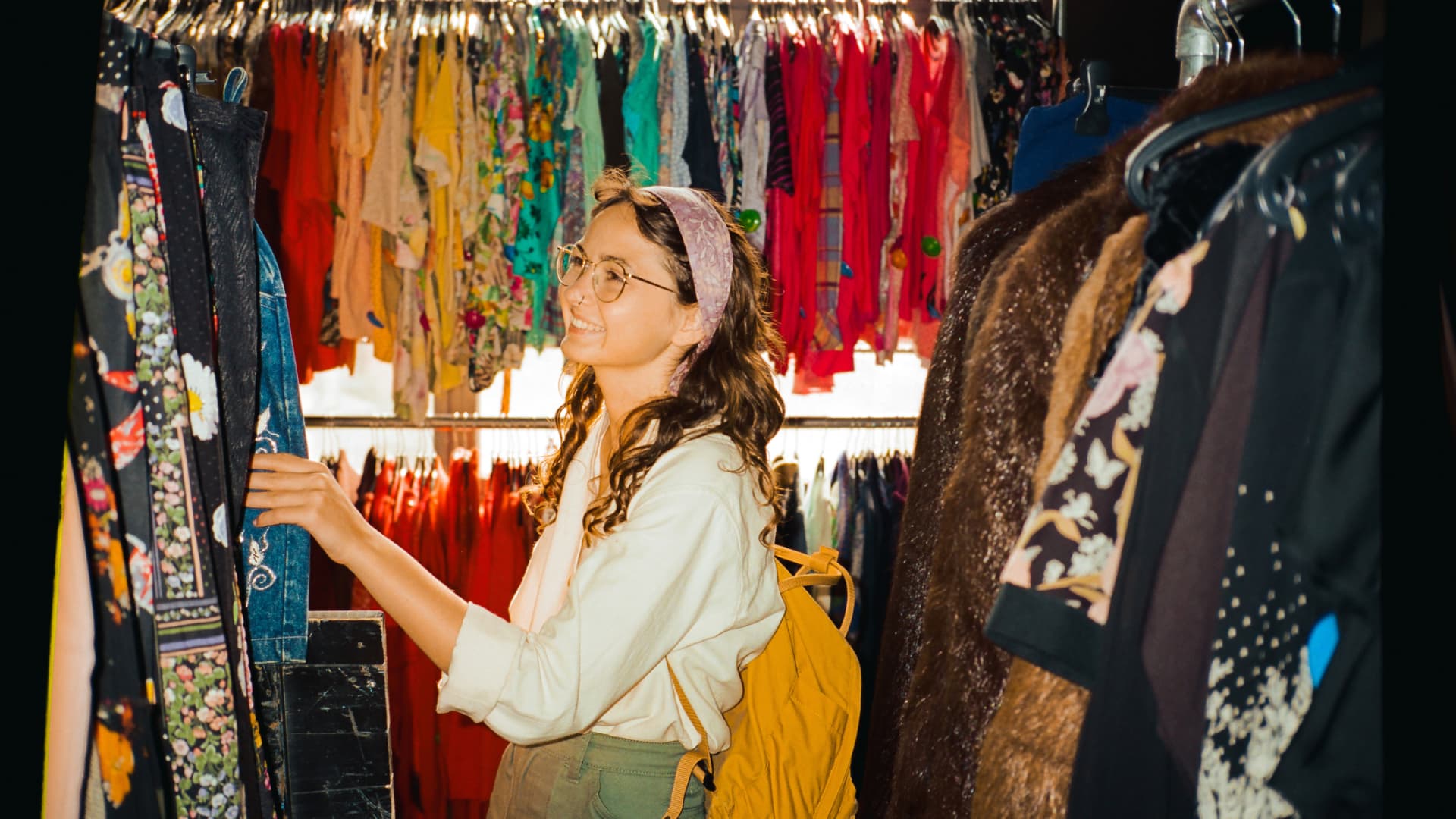
Faced with higher costs, 67% plan to change their shopping habits, according to the report by Bid-on-Equipment. Among the top changes respondents plan to adopt, 46% say they will shop at thrift or secondhand stores. Other saving strategies include comparison shopping or buying fewer imported goods. The survey polled more than 1,000 adults in January.
More from Personal Finance:
‘I cry a lot but I am so productive, it’s an art’
Recession pop: How music hits on economic trends
‘I’m looking for a man in finance’
In another survey by shopping app Smarty, 50% of respondents said with tariffs, they’re more likely to consider secondhand goods or local alternatives.
“Initially there’s quite a bit of uncertainty, and we expect that to grow while the timetable for these tariffs start to become people’s reality,” said Vipin Porwal, Smarty’s founder. “Savvy consumers will look to ramp up savings and rewards opportunities any way they can.”
Some Americans reconsider thrifting
A separate report by ThredUp, an online consignment and thrift store, reflects a similar finding: More than half, 55%, of surveyed consumers say if the economy doesn’t improve, they’ll spend a higher share of their apparel budget on secondhand items.
“You can see this only amplifying” in a world with tariffs and inflation, said James Reinhart, CEO of ThredUp.
In fact, for 60% of respondents, thrifted clothes gives them the most “bang for their buck,” the report found. The report is based on research by GlobalData, as well as a December 2023 survey of more than 3,600 adults.
‘Tariffs are a tax’
“The tariffs are a tax on the consumer,” said Shawn Grain Carter, an associate professor at the Fashion Institute of Technology, part of the State University of New York.
Some popular brands like Shein and Temu imported from China could face an immediate impact and will likely funnel those extra costs to customers in the way of higher prices.

As part of the new tariffs on China, President Donald Trump revoked a popular tax loophole known as de minimis. The exemption allowed many e-commerce companies to send goods worth less than $800 into the U.S. duty-free.
“This is a major change,” Ann Cantrell, associate professor of fashion business management at the FIT, said of the new rule.
Recommerce is taking off
Buying from secondhand stores to get a discount is not a new trend. In 2023, 85% of respondents said “saving money” was the top reason they shop in thrift stores, according to a 2024 report by Capital One.
What’s more, thrifters save on average $1,760 a year by purchasing secondhand, the bank found.
Shoppers continue to embrace so-called recommerce, driven by a pursuit of value and a desire to shop in more sustainable ways. Reports show the stigma around buying secondhand is now largely gone.
Over the next five years, the recommerce market is projected to grow 55% by 2029, reaching $291.6 billion and outpacing the overall retail market, according to a 2024 recommerce report by OfferUp, an online marketplace for buying and selling new and used items.
While the industry has been dominated by clothing resale, 76% of recommerce transactions now involve non-clothing items like electronics, furniture, home goods, sports equipment and car parts, OfferUp found.
Still, secondhand shopping cannot replace all of the conveniences that consumers have become accustomed to, according to Steven Conners, founder and president of Conners Wealth Management in Scottsdale, Arizona.
“We are in a convenience economy, we are programmed by the likes of Amazon,” Conners said. “I would be reluctant to say secondhand items are going to be all the rage six months from now.”
What to know before you shop secondhand
Whether you’re scrolling online for a secondhand item or stepping into a brick-and-mortar thrift store, you should prioritize the quality and the construction of your products, experts say.
Consumer savings expert Andrea Woroch recommends shopping local listing sites like Facebook Marketplace and NextDoor to find deals for large household items and sporting goods, such as furniture, bikes and even light fixtures like chandeliers, which are often imported and tend to cost a lot to ship.
However, “avoid large household appliances which could not function properly if you’re buying directly from another person,” Woroch said. “Your best bet with large and small kitchen appliances is to look for certified refurbished models from reputable retailers like Amazon Renewed or open-box items or floor models from The Home Depot or Best Buy.”
When it comes to clothing, there is no shortage of stores and sites for secondhand apparel and accessories. Those savings may not be as significant, Woroch cautioned.
“Sometimes the prices for gently used clothing are similar to what you can find on sale for new items at the end of the season from regular retailers or through discount shopping stores like Nordstrom Rack, Ross and TJMaxx,” she said.
However, there may still be a “better value proposition” through secondhand and resale stores, FIT’s Grain Carter said.
But “to get the best value for your money” consider the four C’s, Grain Carter said: cut, construction, craftsmanship and condition.
For instance, look at the fibers and materials used to make the clothing item: cotton, silk, linen, flax and wool are natural fibers that will last longer. Engineered or “man-made” fibers like spandex will decompose and have a “shorter shelf life,” according to Grain Carter.
“When you start paying attention to those things, you’ll know this is a garment that has stood the test of time,” she said — and better yet, “it will continue to stand the test of time.”


Personal Finance
Next-Generation Retirement Planning: Managing Longevity Risk and Variable Income Streams


U.S.- Canada Trade Talks Collapse; Carney Says Retaliatory Tariffs Begin September 8

Flock Cameras and the Future of Public Security

AI Infrastructure Boom Hits Physical Limits: Power, Financing, and Supply Chain Strain

Armanino adds Strategic Accounting Outsourced Solutions

New 2023 K-1 instructions stir the CAMT pot for partnerships and corporations

Tax Strategy: Employee Retention Credit update
-

 Stock News1 week ago
Nvidia Q2 FY2027 Earnings beats Wall Street Expectation with Record $96.2 Billion Revenue
-
 Technology5 days ago
AI Infrastructure Boom Hits Physical Limits: Power, Financing, and Supply Chain Strain
-
 Technology3 days ago
Flock Cameras and the Future of Public Security
-
 Economics3 days ago
U.S.- Canada Trade Talks Collapse; Carney Says Retaliatory Tariffs Begin September 8