Connect with us

Leaders

Rishi Sunak, The politic and the Successful Businessman

Published

on

Rishi Sunak, The politic and the Successful Businessman
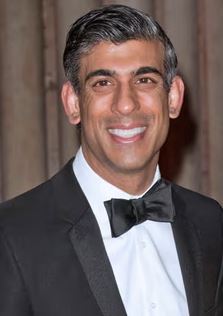
In the dynamic landscape of British politics, few stories are as compelling as that of Rishi Sunak – a man who has shattered glass ceilings and redefined leadership in the United Kingdom. Born to Indian immigrants who came to Britain with dreams of a better life, Sunak’s journey is a testament to hard work, education, and unwavering determination.

Early Life and Education: The Foundation of Success

Growing up in Southampton to parents of Punjabi Indian descent, Rishi Sunak was raised in a family that deeply valued education and opportunity. His father was a doctor, and his mother ran a local pharmacy – instilling in young Rishi the importance of professional excellence and community service. These early influences would shape his future trajectory.

Sunak’s academic prowess was evident from an early age. He excelled at Winchester College, one of Britain’s most prestigious schools, before securing a place at Oxford University, where he studied Philosophy, Politics, and Economics (PPE) – a degree that has long been a launching pad for political leaders.

Business Success: The Goldman Sachs and Finance Years

Before entering politics, Sunak built an impressive career in finance. At Goldman Sachs, he honed his skills as an investment banker, demonstrating the sharp analytical thinking and strategic mindset that would later define his political approach. His subsequent role at hedge fund management firm TCI Fund Management further showcased his business acumen, where he earned substantial financial success.

Perhaps most significantly, Sunak co-founded Theleme Partners, a global investment firm, and became a partner at Stanford-based investment firm Catamaran Ventures. These achievements not only demonstrated his financial expertise but also highlighted his entrepreneurial spirit – a rare quality in political circles.

Political Ascendancy: A Rapid Rise

Sunak’s political journey has been nothing short of meteoric. Elected as a Conservative MP for Richmond (Yorks) in 2015, he quickly gained respect within the party. His breakthrough came as Chancellor of the Exchequer during the unprecedented challenges of the COVID-19 pandemic, where he introduced the furlough scheme that supported millions of British workers.

In October 2022, he made history by becoming Britain’s first Prime Minister of Asian descent and the youngest in modern times. His appointment was not just a personal triumph but a powerful symbol of Britain’s evolving multicultural identity.

Future Vision: Modern Conservative Leadership

As Prime Minister, Sunak has articulated an ambitious vision for Britain. He seeks to stabilize the economy, tackle inflation, and position the UK as a competitive, innovative global player. His tech-savvy approach and commitment to digital transformation signal a forward-thinking leadership style.

Key policy priorities include:

  • Economic recovery and fiscal responsibility
  • Technological innovation and green energy investments
  • Strengthening international relationships post-Brexit
  • Addressing regional inequalities

Personal Life: The Human Behind the Politician

Beyond his professional achievements, Sunak is a family man. Married to Akshata Murty, daughter of an Indian tech billionaire, he balances high-stakes leadership with a grounded personal life. His story is one of integration, showing how talent and hard work can transcend cultural and socioeconomic boundaries.

Rishi Sunak represents a new generation of political leadership – global, dynamic, and unafraid to challenge traditional narratives. His journey from the child of immigrants to the highest office in British politics is not just a personal success story, but an inspiration for countless others.

Rishi Sunak held the responsibility of Prime Minister of the United Kingdom from 25 October 2022 to July 2024.


Level Up Your Leadership

Level Up Your Leadership

Continue Reading

Leaders

Adaptive Governance in Volatile Markets

Published

on

adaptive governance in volatile markets

The hallmark of successful corporate leadership in late July 2026 is adaptive governance—the ability to maintain a clear, long-term strategic vision while dynamically adjusting tactical operations in response to swift macroeconomic shifts. In an operational environment marked by unilateral trade tariffs, technological transformations, and shifting regulatory landscapes, rigid multi-year strategic plans are increasingly ineffective. Today’s most resilient chief executives and board directors operate through flexible, scenario-driven governance structures.

Adaptive governance requires building transparent, decentralized communication frameworks across the enterprise. Executive leadership must actively eliminate organizational silos and encourage operational teams to report emerging supply chain frictions, cost increases, or technological bottlenecks immediately. By shortening the feedback loop between ground-level operations and C-suite decision-makers, leaders can execute timely strategic adjustments before localized operational hurdles develop into major corporate setbacks.

Furthermore, effective modern governance demands balancing rapid technological integration with rigorous ethical oversight. As automated decision tools and algorithmic frameworks manage larger portions of daily enterprise operations, executive boards must establish proactive governance guardrails to monitor data privacy, algorithmic accuracy, and systemic operational risk. Leaders who neglect model governance risk significant brand damage and regulatory penalties if automated systems make flawed operational choices.

Ultimately, executive excellence in 2026 is defined by organizational resilience, strategic agility, and unwavering purpose. By empowering decentralized decision-making, investing in continuous workforce adaptability, and maintaining robust risk management protocols, modern leaders can steer their organizations through complex economic conditions while establishing a lasting competitive advantage.

Continue Reading

Leaders

Adaptive Governance in Turbulent Times: Leadership Strategies for the Late-2026 Landscape

Published

on

Adaptive Governance in Turbulent Times

The defining characteristic of successful executive leadership in July 2026 is adaptive governance—the capacity to maintain steady strategic direction while dynamically recalibrating tactical execution in response to relentless market shifts. In an environment shaped by shifting trade policies, technological evolution, and macroeconomic volatility, rigid multi-year strategic plans are rapidly obsolete. Today’s most effective chief executives and board chairs operate through dynamic, scenario-based governance frameworks built for rapid adaptation.

Adaptive governance begins with cultivating organizational humility and institutional awareness at the highest levels. Executive teams must move past confirmation bias, establishing transparent internal communication channels that encourage front-line operational staff to report emerging market frictions, supply constraints, or technological bottlenecks immediately. By shortening the feedback loop between operational reality and C-suite decision-making, leaders can execute decisive strategic pivots long before minor operational challenges evolve into public corporate crises.

Furthermore, modern leadership requires balancing aggressive technological adoption with robust ethical stewardship. As artificial intelligence systems and automated decision frameworks assume larger roles in corporate operations, board leadership must establish strict governance guardrails to oversee algorithmic fairness, data privacy compliance, and systemic operational risk. Leaders who neglect model governance risk severe brand erosion and regulatory backlash if automated systems execute flawed strategic decisions.

Ultimately, effective executive leadership in late 2026 is defined by resilience, transparency, and clarity of purpose. By building agile organizational structures, fostering a continuous learning culture, and establishing unwavering ethical standards, executive leaders can navigate macroeconomic uncertainty with confidence, transforming systemic industry disruptions into lasting competitive advantages.

Continue Reading

Leaders

Cultivating Institutional Resilience: How Modern Leaders Build Anti-Fragile Organizations

Published

on

How Modern Leaders Build Anti-Fragile Organizations

In the mid-2026 corporate arena, executive performance is increasingly measured not merely by peak quarterly profitability, but by institutional resilience—the ability of an organization to withstand external shocks, adapt under pressure, and emerge stronger from systemic disruptions. As supply chain volatility, regulatory shifts, and technological shifts continue to test corporate stability, forward-thinking leaders are actively rearchitecting their enterprises around principles of anti-fragility.

Building an anti-fragile enterprise requires a fundamental departure from hyper-optimized, single-point-of-failure management practices. For decades, corporate efficiency was defined by ultra-lean inventories, single-source supplier contracts, and minimal capital reserves. While these practices maximized short-term return on capital during stable economic periods, they left organizations deeply vulnerable to sudden external disruptions. Resilient leaders in 2026 deliberately introduce strategic redundancy into critical operational channels—maintaining diversified supplier bases, multi-region operational capacity, and robust liquidity buffers.

Equally important is the cultivation of a psychologically safe, decentralized leadership culture. In times of crisis, centralized command-and-control hierarchies frequently bottleneck critical operational responses due to information delays. Anti-fragile leaders empower regional managers and operational teams to exercise decisive localized initiative within clear strategic guardrails. This decentralized authority fosters operational agility, allowing regional teams to address disruptions directly while maintaining alignment with broader corporate objectives.

For board directors and chief executives, instilling anti-fragility is a continuous, long-term strategic commitment. It requires prioritizing capital preservation during expansionary cycles, investing heavily in employee adaptability, and evaluating every strategic decision through the lens of long-term survival. Leaders who cultivate deep institutional resilience ensure that their organizations not only navigate the uncertainties of 2026, but thrive amidst continuous change.

Continue Reading

Trending