
Accounting
SALT talks gain steam with Trump’s blessing on tax break

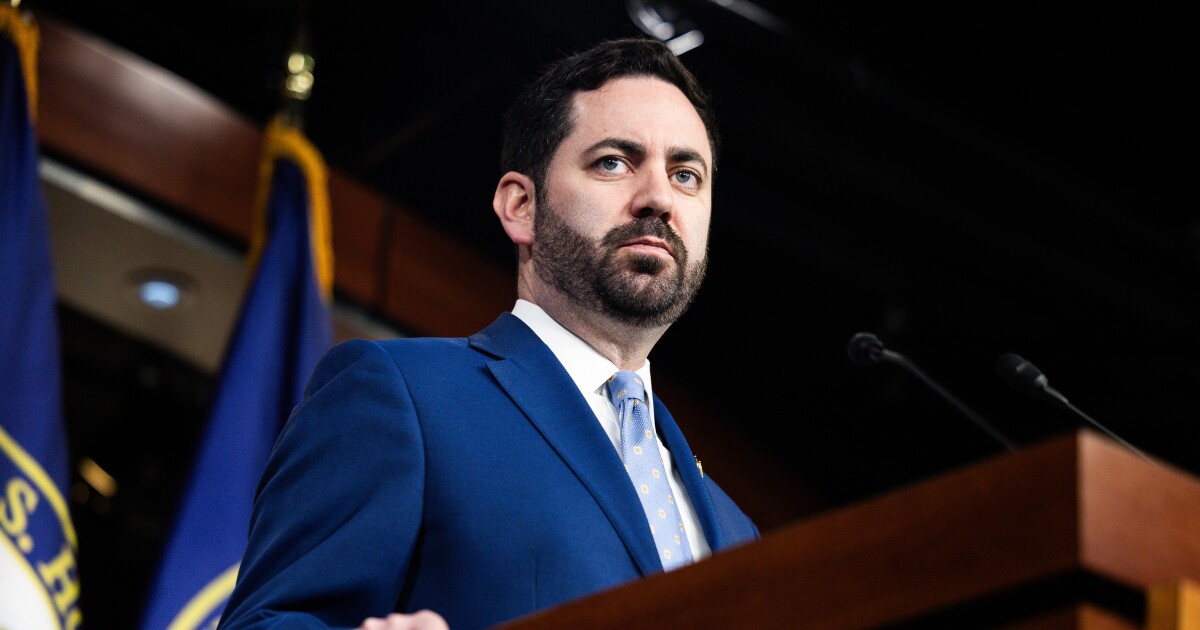

House Republicans are in talks over raising the cap for state and local tax deductions after winning pledges from President Donald Trump and congressional leaders to include the measure in a must-pass tax bill this year.
New York Republicans are having discussions about how to raise the $10,000 SALT cap so that their constituents can deduct more local income and real estate taxes from federal bills. Lawmakers are hoping to come up with a figure for the deduction cap in the coming weeks — potentially as soon as February, GOP Representative Nicole Malliotakis said.
“We looked at increasing the deduction, perhaps putting in some income restrictions so it’s not going to billionaires. We talked about possibly the marriage penalty. We talked about if second properties would be allowed for deduction,” Malliotakis said. She said increasing the SALT cap to $20,000 would not be enough.
How to handle SALT will be a key point of negotiations in Congress this year as Republicans write a broader tax bill to extend Trump’s 2017 cuts, which will expire at the end of the year unless lawmakers act.
Several Republicans representing areas in New York, California and New Jersey — where high incomes, property values and local taxes make an increase in the SALT cap especially lucrative for many residents — have said they’d block the bill if the deduction isn’t adequately addressed. It’s a threat they could make good on, given the GOP’s narrow majority in the House.
The race to negotiate an increase to the SALT cap kicked off earlier this month after several members from those high-tax states met with Trump at his Mar-a-Lago resort. Ways and Means Chairman Jason Smith has also expressed support for including SALT in the bill.
New York Representative Mike Lawler is among the Republicans due to meet with Trump at the White House on Wednesday to discuss issues including SALT. Lawler said Trump has been supportive of ensuring that the question is resolved in any tax bill Republicans write in 2025.
“He is in full agreement with us, which is extremely helpful, obviously, when dealing with some of my colleagues who are reflexively opposed because they think they are subsidizing bad blue-state policies,” Lawler said on Wednesday at a Politico event in Washington.
It was Trump himself who first imposed the cap on SALT during his 2017 legislation, where it helped offset the cost of other tax cuts. But many of the New York and California districts that most benefit from SALT have flipped Republican, putting pressure on the party to reverse course.
Along with SALT and the extension of the 2017 bill, Republicans are also weighing Trump’s campaign tax promises including plans to stop taxing overtime pay, tips and Social Security — proposals which could cause the cost of any tax bill to balloon. House Speaker Mike Johnson said Tuesday he wants to pass the bill by May.
Representative Nick LaLota, a Long Island Republican who has been vocal about raising the cap, said he expects pro-SALT House members to take a proposal for a new SALT cap to the White House, backed with an explanation of “why that number is specifically important.”
Despite having the blessing of Trump and congressional leaders to address SALT in the tax bill, Republicans are still divided on exactly how high to push the deduction cap, and on other details. Lawler has introduced a bill that would lift the cap to $100,000 for individuals and $200,000 for those filing jointly.
“Any increase is a win for my constituents,” Malliotakis said in an interview. “Any money you can keep in their pockets will be a step in the right direction.”
Lawler said moderate Republicans are determined to find a fix before agreeing to other aspects of the proposed tax bill.
“We have unified government for only the fourth time since World War II,” he said. “Republicans have one opportunity to get this right, and it means everybody is going to have to give.”





Nvidia Q2 FY2027 Earnings beats Wall Street Expectation with Record $96.2 Billion Revenue

Treasury Bond Volatility Forces Bessent to Double Debt Buyback Size as Yields Swing

Nvidia Earnings Preview: What Wall Street Expects From the AI Bellwether’s Q2 Report

Armanino adds Strategic Accounting Outsourced Solutions

New 2023 K-1 instructions stir the CAMT pot for partnerships and corporations

Tax Strategy: Employee Retention Credit update
-

 Economics1 week ago
Nvidia’s Potential $3 Billion SB Energy Investment Could Reshape AI Infrastructure
-

 Economics5 days ago
Top 10 Largest Economies by 2030: IMF & World Bank GDP Projections for Global Powerhouses
-

 Stock News4 days ago
How to understand Intel $15B Stock Offering
-
 Stock News1 day ago
Nvidia Earnings Preview: What Wall Street Expects From the AI Bellwether’s Q2 Report
-

 Technology1 week ago
U.S.-China AI Competition Intensifies as Washington Pushes Allies to Choose Sides
-

 Economics5 days ago
Economic Profile of the United States of America (2026–2030 Horizon)
-

 Leaders4 days ago
Jackson Hole 2026: What the First Symposium Under Fed Chair Kevin Warsh Means for Markets
-

 Economics4 days ago
U.S. National Debt Surpasses $40 Trillion for the First Time: What It Means for the Economy