
Personal Finance
Senators press Social Security on ‘dangerous’ reported employee cuts

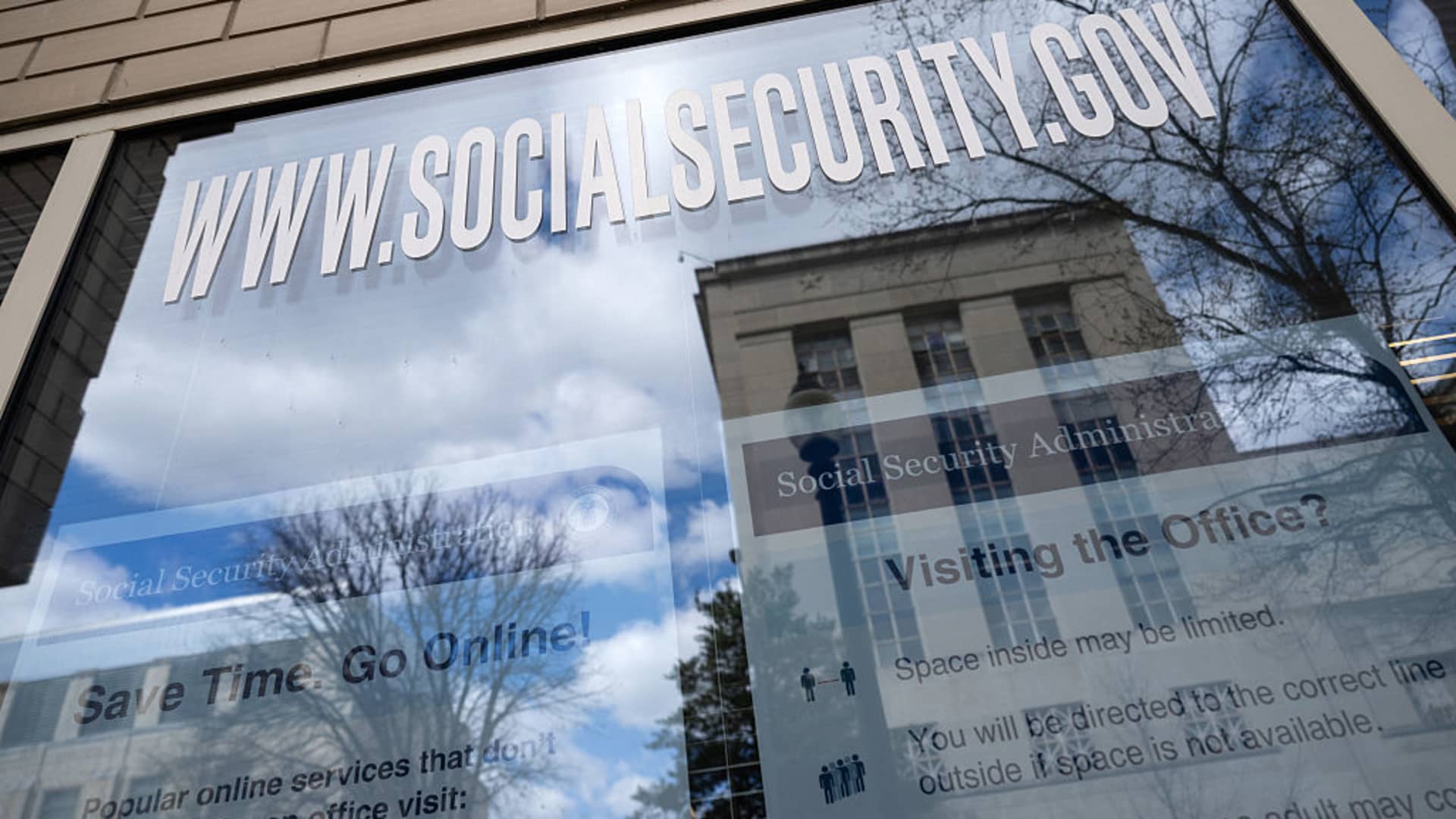
A Social Security Administration office in Washington, D.C., on March 26. The Department of Government Efficiency (DOGE) is reportedly aiming to reform and downsize the agency.
Saul Loeb | Afp | Getty Images
Several Democratic senators are demanding answers from the Social Security Administration following reports that the agency may make staff cuts to a significant department within the agency.
The Social Security Administration is reportedly considering significant workforce reductions, including a potential 50% cut in the Office of the Chief Investment Officer. The department, otherwise known as OCIO, is responsible for protecting sensitive data, maintaining benefit claims processing systems and managing the agency’s website and online portal.
The prospective cuts come as the SSA has already had “ongoing issues” with its website, Sens. Elizabeth Warren, D-Mass., Kirsten Gillibrand, D-N.Y., and Ron Wyden, D-Ore., wrote in a letter dated April 13 to Social Security Administration acting commissioner Leland Dudek.
“We are concerned these cuts will lead to further website and benefit disruptions, preventing tens of millions of Americans from accessing their hard-earned Social Security and Supplemental Security Income benefits,” the senators wrote.
Neither the White House nor the Social Security Administration responded to CNBC’s request for comment regarding the reported OCIO cuts.
Sen. Elizabeth Warren, D-Mass., walks with Sen. Ron Wyden, D-Ore., following a press conference with Senate Democrats on Social Security at the U.S. Capitol on April 1 in Washington, D.C.
Win Mcnamee | Getty Images News | Getty Images
The Social Security Administration website has crashed repeatedly and suffered outages, the senators wrote. The lawmakers previously wrote a letter to the agency asking about a March 31 issue that prompted some beneficiaries to receive messages they are “not receiving payments” and see their account histories disappear.
In addition, the agency’s field offices are also experiencing glitches that impact their ability to serve the public, according to the senators.
The cuts to OCIO would be “intentional – and dangerous,” the lawmakers wrote. The OCIO staff know the agency’s programming language and can keep its systems running, the senators said.
President Donald Trump on March 27 signed an executive order ending collective bargaining for many federal workers. Because OCIO employees are represented by a union, that would affect them. The executive order makes it easier to replace existing employees with complacent personnel from the so-called Department of Government Efficiency, according to the senators.
More from Personal Finance:
Estimates point to lower Social Security cost-of-living adjustment in 2026
Social Security Administration updates new anti-fraud measures
Disability advocates sue Social Security and DOGE to stop service cuts
The Social Security Administration was already at a 50-year staffing low when the Trump administration took office, the lawmakers note. Since then, the agency has announced plans to cut its force by more than 12%.
“We ask that you immediately cease all OCIO firings and act swiftly to restore SSA system and website functionality to prevent any further disruption of Social Security beneficiaries’ access to their account information and benefits,” the senators wrote.
The letter follows an April 10 letter sent by 21 senators, led by Sens. Gillibrand and Wyden, demanding the Trump administration stop attacks on the agency, following plans for staffing cuts, field office closures and reduced phone services.
Democratic senators have also launched a “war room” to work to fight the changes that are happening at the Social Security Administration. As part of that initiative, the leaders are planning to propose legislation that would provide an emergency $200 per month boost to benefits through the end of the year, according to a source familiar with the situation.

Last week, it was reported that the Social Security Administration would no longer use press releases and “dear colleague” letters to advocacy groups and third-parties to communicate with the public, and instead shift its communications exclusively to Elon Musk’s social media platform X. The report also suggested the Social Security Administration plans to reduce its regional workforce by approximately 87%.
White House spokesperson Elizabeth Huston said via email that that report is “misleading.”
“The Social Security Administration is actively communicating with beneficiaries and stakeholders. There has not been a reduction in workforce,” Huston said.
Staff from regional offices are being reassigned to front-line help, Huston said, to “improve the delivery of services” and allocate “finite resources where they are most needed.”
“President Trump will continue to always protect Social Security,” Huston said.

Personal Finance
Next-Generation Retirement Planning: Managing Longevity Risk and Variable Income Streams


U.S.- Canada Trade Talks Collapse; Carney Says Retaliatory Tariffs Begin September 8

Flock Cameras and the Future of Public Security

AI Infrastructure Boom Hits Physical Limits: Power, Financing, and Supply Chain Strain

Armanino adds Strategic Accounting Outsourced Solutions

New 2023 K-1 instructions stir the CAMT pot for partnerships and corporations

Tax Strategy: Employee Retention Credit update
-

 Stock News1 week ago
Nvidia Earnings Preview: What Wall Street Expects From the AI Bellwether’s Q2 Report
-

 Accounting1 week ago
SEC’s Semiannual Reporting Proposal Faces Investor Pushback: What CFOs Need to Know
-

 Stock News1 week ago
Nvidia Q2 FY2027 Earnings beats Wall Street Expectation with Record $96.2 Billion Revenue
-

 Finance1 week ago
Treasury Bond Volatility Forces Bessent to Double Debt Buyback Size as Yields Swing
-
 Technology5 days ago
AI Infrastructure Boom Hits Physical Limits: Power, Financing, and Supply Chain Strain
-
 Technology3 days ago
Flock Cameras and the Future of Public Security
-
 Economics3 days ago
U.S.- Canada Trade Talks Collapse; Carney Says Retaliatory Tariffs Begin September 8