Connect with us

Personal Finance

The first quarter estimated tax deadline for 2025 is April 15

Published

on

Georgijevic | E+ | Getty Images

If you’re scrambling to file your taxes, you could miss another key due date on April 15: the first-quarter estimated tax deadline for 2025. 

Typically, quarterly payments apply to income without tax withholdings, such as self-employment earnings, rental income, interest, dividends or gig economy work. Similarly, retirees and investors “frequently need to make these payments,” the IRS said in a news release last week. 

The first quarter deadline for 2025 “could be a surprise” if you’re newly self-employed or recently started contract work, said Misty Erickson, tax content manager at the National Association of Tax Professionals. 

More from Personal Finance:
With time running out, here are some tax tips for last-minute filers
Can’t pay your taxes by April 15? You have options, IRS says
See if you qualify for the $1,400 IRS stimulus check before the deadline

Those individuals could experience “sticker shock” when it’s time to file 2025 taxes or be subject to future penalties, Erickson said.

Generally, you must make quarterly payments if you expect to owe at least $1,000 for the current tax year, according to the IRS.

The April 15 deadline applies to earnings from Jan. 1 through March 31. The other 2025 quarterly due dates are June 16, Sept. 15 and Jan. 15, 2026.

If you skip one of the payments, you could trigger an interest-based penalty calculated with the current interest rate. The fee compounds daily.

Follow the ‘safe harbor’ guidelines

Generally, you can avoid IRS penalties by following the “safe harbor” guidelines, certified public accountant Brian Long, senior tax advisor at Wealth Enhancement in Minneapolis, previously told CNBC

To satisfy the safe harbor rule, you must pay at least 90% of your 2025 tax liability or 100% of your 2024 taxes, whichever is smaller.

The threshold jumps to 110% if your 2024 adjusted gross income was $150,000 or more, which you can find on line 11 of Form 1040 from your 2024 tax return.

However, the safe harbor only protects an individual from an IRS underpayment penalty. If you don’t pay enough, you could still owe a balance for 2025, experts say.

Tax Tip: IRA Deadline

Where to pay your quarterly taxes 

There are “several options” for estimated tax payments, according to the IRS.

You can pay by mail, online via IRS Direct Pay or the Treasury Department’s Electronic Federal Tax Payment System. You can also use a debit card, credit card or digital wallet.  

Your IRS online account “streamlines the payment process” because you can monitor pending transactions, see history and other key tax filing information, according to the agency.

The online account makes it easier to correct mistakes “sooner rather than later,” Erickson said. “I have heard stories of payments being misapplied, so this is a way to double-check.” 

If you mail the payment, experts recommend sending it via certified mail with a return receipt for proof.

Continue Reading

Personal Finance

$20,000 Caution Bond Requirement for US Visa Applications imposed on 50 Countries

Published

on

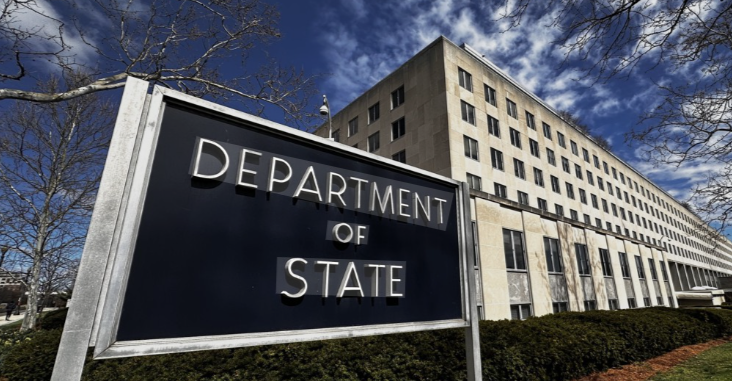
The United States Department of State has officially implemented a revised visa policy introducing a mandatory posting requirement for caution payments of up to $20,000 on select foreign travel applications. Under the updated regulatory framework, consular officials are authorized to require temporary nonimmigrant visa applicants from targeted foreign countries to post a refundable financial bond of $20,000 as a condition for visa issuance. The policy mechanism is designed to address diplomatic concerns regarding high overstay rates among temporary visitor, business, and educational visa categories.

The caution bond pilot program applies selectively to foreign nationals from designated countries whose diplomatic entities record historical visa overstay rates exceeding established federal thresholds. Under administrative guidelines published by the State Department, the full financial deposit is posted directly to a dedicated federal escrow account prior to final visa issuance. The entire caution payment is automatically refunded to the applicant upon verified proof of timely departure from the United States in strict compliance with the authorized duration of stay. Conversely, failure to depart within the legal timeframe results in full forfeiture of the posted financial bond to the United States government.

Diplomatic representatives and travel policy experts have expressed varying perspectives regarding the operational implementation of the caution bond system. Administration officials emphasize that the measure serves as an effective, market-based incentive to enforce international travel compliance and preserve domestic immigration security standards. However, international trade organizations and foreign diplomatic missions have raised concerns regarding the financial burden imposed on legitimate business travelers, foreign students, and commercial partners from developing nations.

The United States finalized the rule to make the temporary visa bond program permanent, taking effect on August 3, 2026. The updated permanent regulation replaces the prior 12-month pilot, eliminates the lowest $5,000 tier, and raises the maximum required bond amount to $20,000 for specific B-1/B-2 business and tourist visa applicants.

Here is the list of the 50 countries on the list as o August 3, 2026

African Nations (31 Countries)

  • Algeria
  • Angola
  • Benin
  • Botswana
  • Burundi
  • Cabo Verde (Cape Verde)
  • Central African Republic
  • Côte d’Ivoire (Ivory Coast)
  • Djibouti
  • Ethiopia
  • Gabon
  • The Gambia
  • Ghana
  • Guinea
  • Guinea-Bissau
  • Lesotho
  • Malawi
  • Mauritania
  • Mauritius
  • Mozambique
  • Namibia
  • Nigeria
  • São Tomé and Príncipe
  • Senegal
  • Seychelles
  • Tanzania
  • Togo
  • Tunisia
  • Uganda
  • Zambia
  • Zimbabwe

Asian & Eastern European Nations (11 Countries)

  • Bangladesh
  • Bhutan
  • Cambodia
  • Georgia
  • Kyrgyzstan
  • Mongolia
  • Nepal
  • Papua New Guinea
  • Tajikistan
  • Turkmenistan
  • Uzbekistan

Caribbean & Latin American Nations (5 Countries)

  • Antigua and Barbuda
  • Cuba
  • Dominica
  • Grenada
  • Venezuela

Oceanian Nations (3 Countries)

  • Fiji
  • Tonga
  • Vanuatu

Continue Reading

Personal Finance

Next-Generation Retirement Planning: Managing Longevity Risk and Variable Income Streams

Published

on

Retirement planning strategies are evolving in 2026 to address increased life expectancies, shifting dynamic market conditions, and the transition away from traditional defined-benefit pensions. Individual investors and financial advisors are abandoning rigid retirement models in favor of flexible, multi-asset strategies designed to mitigate longevity risk and preserve purchasing power over multi-decade retirement horizons.

Mitigating Longevity Risk with Dynamic Asset Allocation
As average life expectancies extend past eighty-five years, one of the primary financial risks facing retirees is outliving their accumulated wealth. Traditional fixed income allocations—such as the standard 60/40 equity-to-bond portfolio—are being reevaluated to ensure portfolios generate sufficient capital growth alongside reliable income.

Financial planners recommend maintaining a meaningful equity allocation throughout retirement to offset long-term inflation erosion. High-dividend equity funds, global real estate investment trusts (REITs), and inflation-indexed Treasuries are combined to create diversified portfolios that deliver both growth and income stability.

The Transition to Dynamic Withdrawal Strategies
The classic “4% safe withdrawal rule” is increasingly replaced by dynamic withdrawal strategies that adapt annually based on market performance. Under a dynamic withdrawal framework, retirees adjust their annual distribution rates within pre-set caps and floors:
– Market Upside: During strong market returns, retirees can increase discretionary spending or fund family legacy gifts.
– Market Downturns: During market pullbacks, spending distributions are temporarily reduced to prevent sequence-of-returns risk and preserve core investment principal.

Guaranteed Lifetime Income Options and Deferred Annuities
To establish a guaranteed baseline for essential living expenses, individuals are incorporating modern fixed-indexed and deferred longevity annuities into their broader retirement architectures. Modern annuity structures offer competitive return caps, transparent fee schedules, and inflation-adjustment options.

By funding essential expenses—such as housing, healthcare, and insurance—with guaranteed income streams from Social Security, pensions, and annuities, retirees can manage discretionary investment portfolios with greater flexibility and lower emotional stress during market volatility.

Actionable Steps for Future Retirees
1. Calculate Baseline Retirement Expenses: Determine fixed living costs and map guaranteed income sources to cover essential expenditures.
2. Adopt Flexible Withdrawal Rules: Implement dynamic spending rules to protect investment principal against market downturns.
3. Incorporate Inflation-Protected Assets: Maintain exposure to dividend-growing equities and inflation-indexed bonds to safeguard long-term purchasing power.

Continue Reading

Personal Finance

Building Generational Wealth: Family Governance, Estate Tax Optimization, and Asset Protection

Published

on

As the largest intergenerational transfer of wealth in history accelerates, high-net-worth families, entrepreneurs, and individual investors are placing heightened emphasis on comprehensive estate planning, family governance, and asset protection. Preserving capital across generations requires a balanced approach combining tax-efficient legal structures with open family communication and financial literacy education.

Optimizing Estate Tax Exemptions and Trust Structures
With potential modifications to federal estate tax exemption thresholds on the horizon, proactive estate planning is essential for high-net-worth households. Estate planning attorneys and wealth advisors are establishing multi-generational trust structures to transfer wealth efficiently while minimizing estate and gift tax exposure.

Popular structural strategies include:
– Irrevocable Life Insurance Trusts (ILITs): Utilizing life insurance proceeds to provide liquidity for estate tax obligations without expanding the taxable estate.
– Grantor Retained Annuity Trusts (GRATs): Transferring rapidly appreciating assets to beneficiaries with minimal gift tax consequences.
– Dynasty Trusts: Preserving wealth across multiple generations while providing long-term asset protection from creditor claims and legal liabilities.

Establishing Family Governance and Financial Education
Legal and financial structures alone cannot guarantee long-term wealth preservation without effective family governance. Financial advisors report that a significant percentage of multi-generational wealth dissipation stems from lack of communication and inadequate financial preparation among heir generations.

Families are establishing formal family governance frameworks, including periodic family meetings, written mission statements, and structured philanthropic foundations. Involving younger family members in charitable grant-making and investment discussions fosters financial stewardship and prepares heirs to manage family assets responsibly.

Digital Asset Custody and Legacy Planning
In today’s modern economy, estate planning must extend beyond physical real estate and traditional brokerage accounts to encompass digital assets. Comprehensive estate plans now include detailed inventories and legal access protocols for corporate domain names, intellectual property, digital media rights, and cryptocurrency holdings.

Fiduciaries and estate executors should be provided with secure, encrypted access mechanisms and clear legal authority to manage and transfer digital holdings in accordance with the owner’s estate directions.

Practical Steps for Legacy Planning
1. Review and Update Estate Documents: Ensure wills, revocable trusts, and power-of-attorney designations accurately reflect current family structures.
2. Establish Structured Trusts: Utilize irrevocable trusts to protect assets from creditors and minimize future estate tax liabilities.
3. Create a Digital Estate Inventory: Document access protocols and legal permissions for all online accounts, intellectual property, and digital assets.

Continue Reading

Trending