
Accounting
Tax season kicks off with non-tax issues center stage

While much has happened during the past few years, and significant change lies immediately ahead, there is little that is new in the upcoming tax season. However, beneficial ownership reporting and tariffs — which are not part of the typical issues that preparers deal with — are visible on the horizon as potential topics of concern.
This filing season appears to be business as usual for now, for most accounting professionals, according to Misty Erickson, tax content program manager at the National Association of Tax Professionals. “That said, there are a few things to keep in mind. With the ever-changing landscape with BOI reporting, business owners that have not already filed, and need to, may be dealing with a tax deadline and a BOI deadline at the same time. While we wait for a new deadline to be announced, this is something to keep in mind and be prepared to advise clients on next steps.”
And keep in mind the executive order regarding a hiring freeze at the IRS, she warned: “This could impact service levels. There are online tools available for tax professionals. It might be beneficial to see if you can complete the action needed online first before calling in.”

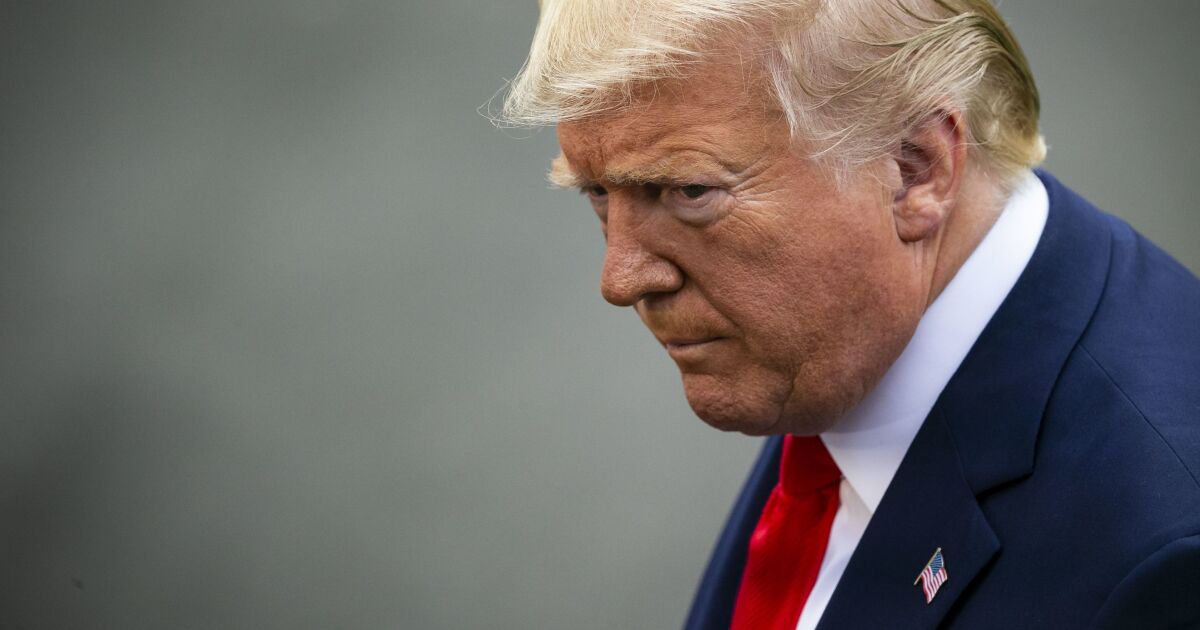
Al Drago/Photographer: Al Drago/Bloomberg
“Also, be on the lookout for taxpayers that purchased an electric vehicle,” she advised. “If they did, do they have a Form 15400, “Clean Vehicle Sellers Report”? This is the report dealers will issue to both the buyers and the IRS for vehicles that qualify for either the clean vehicle credit or the used clean vehicle credit. Tax professionals will need this information to reconcile or claim the credit on their client’s return. Without the form, the credit should not be claimed. Clients can request a copy from the dealer if they believe the vehicle qualifies for the credit.”
A former IRS attorney and head of BOI reporting at FinCEN Guidance, Milan Solarz-Patel addressed the current status of BOI reporting: “While the Supreme Court has granted the government’s request to stay the nationwide injunction in the Texas Top Cop Shop case, the Smith case — also from the Eastern District of Texas, but before a different judge — has resulted in another nationwide injunction that remains in effect. FinCEN has acknowledged the Smith case in its latest alert, confirming that BOI reporting is still paused for now. Reporting companies are not currently required to file but may choose to do so voluntarily.”
“This legal merry-go-round — where one nationwide injunction is lifted only to have another take its place — continues to leave businesses in limbo,” he added. “The Smith case is, in many ways, deja vu, highlighting how fragmented and chaotic the judicial landscape has become for CTA enforcement.”
While the Smith injunction creates yet another temporary pause, the CTA’s bipartisan origins and necessity for international anti-money laundering efforts make it highly likely that the law will ultimately be found constitutional. “The forthcoming decision in an Alabama case currently before the 11th Circuit is expected to provide far more substantive guidance,” Solarz-Patel said.
Jill DeWitt, senior director of compliance and third-party risk management solutions at Moody’s, agreed: “This law was designed to align the U.S. globally with financial transparency, especially around beneficial ownership of entities to help prevent terrorist organizations, organized criminals, and other bad actors from exploiting the U.S. financial system and hiding their illicitly obtained financial gains. While arguments against burdening small businesses with the requirements of beneficial ownership compliance and of financial reporting are understandable, greater transparency could help raise financial institutions’ awareness of bad actors in their customer base and support them in avoiding onboarding bad actors who might have otherwise been hidden or overlooked.”
Define a ‘normal’ tax season
The uncertainty brings increased chances for error, as CPAs rush to meet tight deadlines, deal with obstinate clients, and bone up on areas of tax law with which they may be unfamiliar.
“Probably the most prevalent risk is changes in the regs and accounting standards,” according to Avin Fennell, vice president and senior risk advisor at Aon, program manager for the AICPA Professional Liability Program. It’s important to have a good source for tax news and regulations updates, and to rank clients based on need so you can do a proper resource allocation for each client based on their need. It’s easy to get caught up in the work itself. There has to be a lot of planning beforehand. Decide what you need from each client so you can manage them from a resource perspective. At the end of the day take a few minutes to plan the next day — what low hanging fruit to do first, and plan a time when you can take a step back and give the staff an opportunity to exhale. If you let stress get to you, it’s an invitation to make errors.”
The wild card in the BOI analysis is that it won’t matter what the courts say if the new administration decides not to prioritize enforcement, noted Roger Harris, president of Padgett Business Services.
Harris anticipates that filing season, at its beginning, “is shaping up to be a traditional normal filing season, whatever that means. Legislation to extend and modify the [Tax Cuts and Jobs Act] is the most anticipated, but politics will make it hard to get anything done quickly.”
It’s too soon to tell how the IRS will fare under proposed budget cuts and a new commissioner, Harris believes: “And the ‘back to work’ orders may have to be revised to accommodate contracts with the union. You can’t just override union policy.”
Although the broker’s obligation to issue Form 1099-DA for crypto transactions has been delayed, you still have to report if you had any transactions, noted tax attorney Barbara Weltman, author of “J.K. Lasser’s Small Business Taxes 2025.” “Income and loss are reported in the usual way – there are new lines on Schedule 1. You have to answer the question at the top of Form 1040. If it’s left blank, they won’t process the return. Just as a reminder, the due date of the return is also the same date as the first installment of estimated tax. They are separate payments, but have the same deadline.”
“Deadlines are extended for certain federally declared disaster areas, including the California wildfires and those affected by hurricane damage in western North Carolina,” she added. “And note that the deadline for putting money into an IRA, a Roth IRA and an HSA are not extended even if the time for filing is extended.”
Tariffs and tax season
The year ahead will be a huge year for tax bills, according to Ryan Losi, executive vice president of Piascik. “It is clear that a tax bill is a high priority for the new Congress and president. The outcome might be favorable for some but not so favorable for others. We’re not sure how tariffs will come into play, whether they will be used to offset taxes. A lot will hedge and extend their return to see if a bill is passed with any retroactive provisions. If so, it’s best to extend and see if that’s the case. Otherwise, file then amend and wait for a refund. It may be easier just to put the return on extension.”
While the threat of a tariff has already been used as a negotiating ploy to change the position of some countries, it remains to be seen if it will be used as a revenue-raiser.
Companies are considering several strategic movies to mitigate the impact of proposed tariffs, according to Mathew Mermigousis, national practice leader and vice president of customs & international trade services at Top 10 Firm BDO USA:
- Leveraging the duty drawback program. This can help recover 99% of the customs duties, taxes, and fees paid on imported goods that are subsequently exported or destroyed. It can also be used to recover taxes and fees on imported components used in the manufacture of a product that is later exported or destroyed. Both strategies can be implemented with a retroactive period of five years. (However, the provisions used by the administration to impose a given duty tariff can impact its eligibility for duty drawback. This means that companies looking to use this strategy will need to closely monitor the administration’s policies to determine if this is a viable avenue.)
- Utilizing the first sale principle. This can reduce the dutiable value of goods by basing them on the price paid by the first buyer in a series of sales leading to U.S. importation.
- Transfer pricing tactics. Businesses can closely coordinate new transfer pricing studies, or update existing ones, with customs valuation rules for related-party pricing. This will help achieve the lowest possible value for customs without running afoul of income tax rules which could lead to double taxation.
- Tariff engineering. Since duties are assessed based on the condition of imported goods at the time of import entry, altering this condition can affect their classification and the applicable duty rate. Importers might be able to reclassify goods under different tariff codes if alternative classifications that better match the goods’ composition or functionality. Also, modifying a product’s design or composition during manufacturing can shift its classification to a category with lower tariffs or exclude it from certain punitive tariffs.
- Foreign trade zones. Businesses are exploring the use of foreign trade zones to defer or avoid U.S. Customs duties, including reducing the merchandise processing fee paid at the time of import by consolidating shipments on a weekly basis from the FTZ.





Nvidia Q2 FY2027 Earnings beats Wall Street Expectation with Record $96.2 Billion Revenue

Treasury Bond Volatility Forces Bessent to Double Debt Buyback Size as Yields Swing

Nvidia Earnings Preview: What Wall Street Expects From the AI Bellwether’s Q2 Report

Armanino adds Strategic Accounting Outsourced Solutions

New 2023 K-1 instructions stir the CAMT pot for partnerships and corporations

Tax Strategy: Employee Retention Credit update
-

 Economics1 week ago
Nvidia’s Potential $3 Billion SB Energy Investment Could Reshape AI Infrastructure
-

 Economics5 days ago
Top 10 Largest Economies by 2030: IMF & World Bank GDP Projections for Global Powerhouses
-

 Stock News5 days ago
How to understand Intel $15B Stock Offering
-
 Stock News1 day ago
Nvidia Earnings Preview: What Wall Street Expects From the AI Bellwether’s Q2 Report
-

 Technology1 week ago
U.S.-China AI Competition Intensifies as Washington Pushes Allies to Choose Sides
-

 Economics5 days ago
Economic Profile of the United States of America (2026–2030 Horizon)
-
 Leaders4 days ago
Jackson Hole 2026: What the First Symposium Under Fed Chair Kevin Warsh Means for Markets
-

 Economics4 days ago
U.S. National Debt Surpasses $40 Trillion for the First Time: What It Means for the Economy