
Accounting
Bessent wins Senate confirmation to be US Treasury Secretary

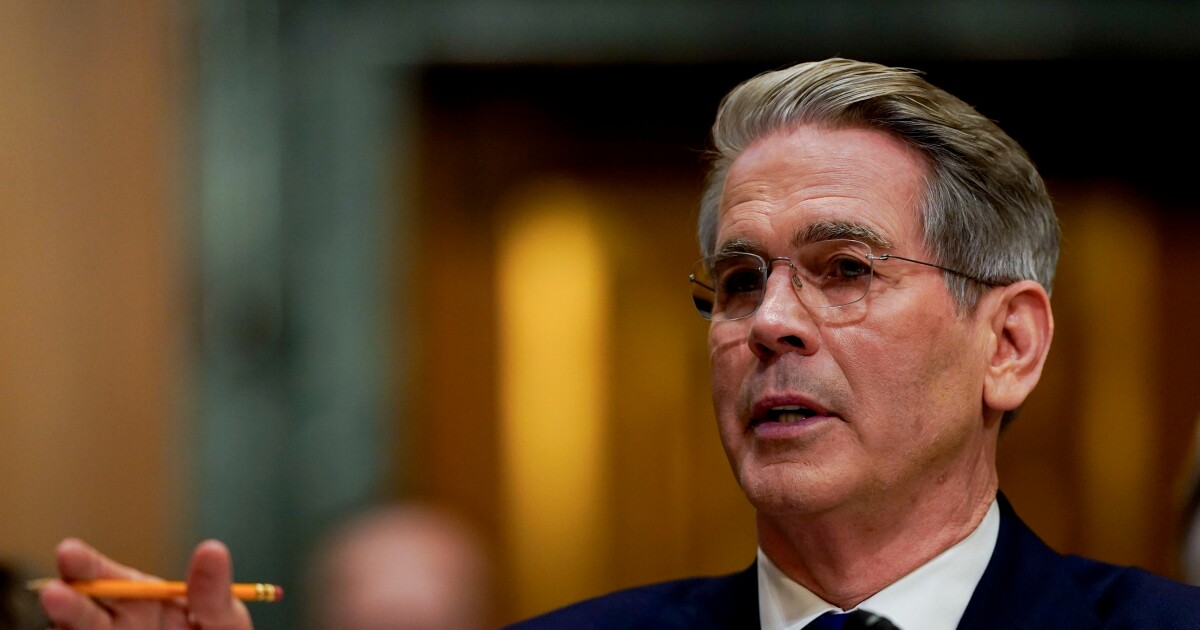

The U.S. Senate confirmed Scott Bessent as the next Secretary of the Treasury, becoming the chief economic spokesman for President Donald Trump and his sweeping agenda of tax cuts, deregulation and trade rebalancing.
The former hedge fund manager won confirmation by a vote of 68 to 29 Monday. Besides the support of all Republican senators, Bessent secured the backing of one independent and 15 Democrats, in a sign the minority party might be more willing to cooperate with the administration on certain economic matters than during Trump’s first term. Trump’s first Treasury chief, Steven Mnuchin, garnered a
Bessent becomes Trump’s
He will be the first openly gay Treasury secretary. He said during his confirmation hearing that this was his third attempt at public service, after his sexual orientation precluded him from attending the U.S. Naval Academy and from joining the Foreign Service.
Once sworn in, the 62-year-old former colleague of billionaire George Soros will face an immediate challenge managing the U.S. debt load. The federal debt limit kicked back in at the start of January, forcing the Treasury to deploy special accounting maneuvers to avoid breaching it. And on Feb. 5, the department is due to update its plans for the issuance of Treasuries at a time of historically wide budget deficits.
It’s been three decades since bond vigilantes bullied a sitting administration into curbing the nation’s fiscal trajectory. Bill Clinton was forced to rejig his economic agenda to bring down Treasury yields that had climbed in the wake of his 1992 election — in turn threatening to boost borrowing costs for Americans on everything from home mortgages to credit cards.
With benchmark 10-year Treasury yields threatening to test the 5% level — thanks in part to the fiscal outlook — Bessent’s expertise in financial markets is seen as a particular asset, amid potential disruption from everything from tariff surprises and tax plans to shifts in monetary policy. Even his Democratic predecessor, Janet Yellen, highlighted his market experience before leaving office this month.
Fiscal outlook
Bessent in his Jan. 16 confirmation hearing underscored his concern about the size of federal borrowing being of such a scale it could potentially constrain the federal government’s response to future crises. “We have never seen this before,” he said of the current deficit being in excess of 6% of GDP despite the U.S. not being in a recession or at war.
His fiscal warning was an echo of similar comments dating from Treasury chiefs in the George W. Bush administration until now. Still, it’s Congress that decides on taxes and spending, so Bessent will need to persuade not just the president to make painful spending cuts, but also lawmakers.
The incoming Treasury chief will have to reconcile his deficit-reduction plans — he has targeted shrinking it to 3% of GDP — with the Trump administration’s much-anticipated tax cuts, which some economists caution may only worsen the fiscal outlook. Bessent has argued that the problem is spending, not taxation levels, and that Trump’s pro-growth agenda will improve the fiscal situation, alongside revenue streams from measures including tariffs.
“A whole-of-government approach that couples deregulation with tax reform and other economic levers, such as implementing strong trade policy, will unleash an economic golden age,” Bessent said at his Senate Finance Committee hearing.
Taxation largely dominated that session, with some Democrats voicing their opposition.
“Now it may not come as any big surprise that a hedge fund manager would defend an unfair tax system that’s rigged to benefit hedge fund managers,” said Ron Wyden, the top Democrat on the finance panel, who joined the bulk of his party’s Senate caucus in voting against Bessent’s confirmation. “But he struggled with tax questions throughout the hearing.”
Sanctions, dollar
Away from the domestic front, Bessent will also need to quickly get up to speed with the Treasury’s raft of sanctions against adversaries across the world and prepare for his first international engagements as the nation’s top economic diplomat. A meeting of Group of Twenty finance ministers due in South Africa in late February could offer a first chance to meet with counterparts from the world’s largest economies.
Bessent suggested he could go harder on Russia sanctions in his confirmation hearing, saying he would be “100% on board for taking sanctions up” on major Russian oil companies if Trump requests such a move. Trump said in a Jan. 22 Truth Social post he would levy taxes, tariffs and sanctions on Russia unless it ends the war in Ukraine.
Bessent also said that the U.S. could “make Iran poor again” through the use of sanctions, later clarifying that he meant the Iranian government and not its people. But levying and enforcing harsh sanctions on two major oil-producing countries without a boost in production from other nations could constrain the supply of oil and drive prices up.
Currency policy and foreign-exchange markets are seen looming large on Bessent’s agenda. In Trump’s press statement announcing Bessent’s nomination, the president highlighted the importance of the US maintaining the dollar’s role as the world’s reserve asset.
During appearances as a Trump advocate before the November election, Bessent was vocal about the need for a new international currency accord. With the pendulum of tariff threats swinging almost hour-by-hour, exchange rates are moving on any snippet of news.
That volatility would have been a trading opportunity in Bessent’s former life as a hedge-fund trader. But he’ll have a new vantage point once sworn in as Treasury chief.





Nvidia Q2 FY2027 Earnings beats Wall Street Expectation with Record $96.2 Billion Revenue

Treasury Bond Volatility Forces Bessent to Double Debt Buyback Size as Yields Swing

Nvidia Earnings Preview: What Wall Street Expects From the AI Bellwether’s Q2 Report

Armanino adds Strategic Accounting Outsourced Solutions

New 2023 K-1 instructions stir the CAMT pot for partnerships and corporations

Tax Strategy: Employee Retention Credit update
-

 Economics1 week ago
Nvidia’s Potential $3 Billion SB Energy Investment Could Reshape AI Infrastructure
-

 Economics5 days ago
Top 10 Largest Economies by 2030: IMF & World Bank GDP Projections for Global Powerhouses
-

 Stock News5 days ago
How to understand Intel $15B Stock Offering
-
 Stock News1 day ago
Nvidia Earnings Preview: What Wall Street Expects From the AI Bellwether’s Q2 Report
-

 Technology1 week ago
U.S.-China AI Competition Intensifies as Washington Pushes Allies to Choose Sides
-

 Economics5 days ago
Economic Profile of the United States of America (2026–2030 Horizon)
-
 Leaders4 days ago
Jackson Hole 2026: What the First Symposium Under Fed Chair Kevin Warsh Means for Markets
-

 Economics4 days ago
U.S. National Debt Surpasses $40 Trillion for the First Time: What It Means for the Economy