
Accounting
The accounting profession’s complicated relationship with creativity.

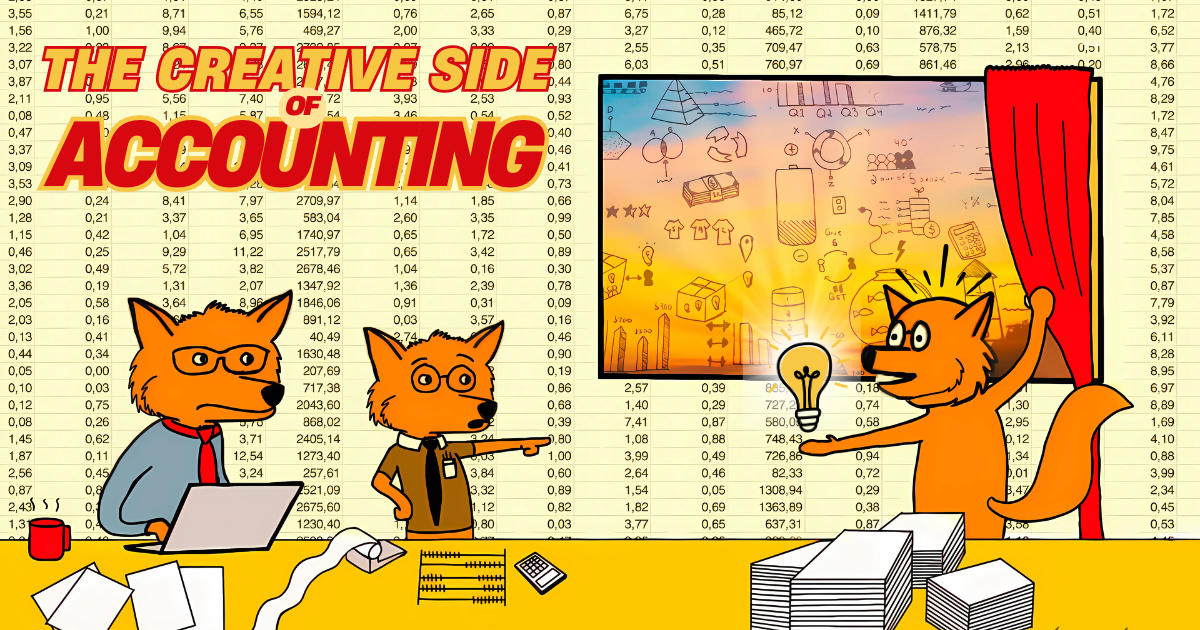
You may not associate the accounting profession with creativity, but creative thinking has always been an essential skill for accountants. Navigating ambiguous business transactions, determining accounting treatments for unprecedented situations, and developing operational workflows requires more than subject matter expertise. It requires creative problem-solving abilities.
Routine accounting tasks such as assigning value to various elements of a bundled arrangement, attributing revenue to a free service period, or identifying an anomaly worth investigating, all require a level of creativity to form your professional judgement.
A prime example is the creative thinking involved to determine the accounting treatment for crypto currencies. It was the creative thinkers of the accounting world that proposed new rules to capitalize certain labor costs tied to internally developed technology. This fueled innovation and contributed to the tech boom of the 1980s.
Accounting needs creative professionals now more than ever. With the rise of artificial intelligence and outsourced labor, today’s accountants need to be forward-thinking advisors who drive innovation and add value in ways that can’t easily be outsourced or automated.

The
Ever since Enron’s notorious accounting scandal in 2001, being a “creative accountant” has had a negative connotation. It insinuates cooked books, shady dealings and compromised ethics. It’s such a career-ending quality that the accounting profession seemingly did everything it could to dissociate itself from creativity.
That approach has had unintended consequences. There’s a deeply rooted belief that accountants are boring and lack creativity and social skills. Those stereotypes are repelling college students at a level that threatens the livelihood of the profession. This has been a major contributing factor to the well-documented shortage of accountants in the pipeline.
Righting the ship
It’s time for accountants to reclaim their creative spirit. There’s a long history of accountants flexing their creativity and driving innovation. The founder of Nike and the inventor of bubble gum were accountants. Marvel poached Simu Liu from the Big Four, and Robert Plant and Mick Jagger were the rockstars of their accounting classes.
By embracing creative thinkers, the accounting profession can boost its appeal with students and better meet the evolving needs of its clients. Celebrate those that break the mold, challenge the status quo, and resist the “same as last year” practice. Praise the creative problem-solvers who find and implement process efficiencies, craft alternative procedures and identify automation opportunities. Instead of suppressing creativity, highlight it.
For those accountants who claim they’re not creative, I beg to differ. You’re likely more creative in your accounting work than you realize. It’s also important to recognize that creativity is a muscle that can be developed with practice. Here are a few exercises that accountants can use to sharpen their creative thinking skills.
1. Change your environment. It’s no coincidence that your best ideas come to you while you’re on a walk or taking a shower. A change in environment can stimulate creativity. Next time your team needs to brainstorm, skip the video call and opt for a phone call where everyone takes a walk. Create calendar blocks to dedicate time for thinking away from your desk. Reduce distractions and resist the urge to multi-task. These small changes will help to attract inspiration.
2. Encourage idea generation. Accountants tend to be perfectionists and that can stifle creativity. Oftentimes a perfect solution doesn’t exist, so try to take a “no idea is a bad idea” approach. That first idea is rarely the best one, so use a stream of consciousness to keep the ideas flowing. Your brain has limited working memory as well, so get those ideas down on paper to help free up your headspace. By breaking big problems into small ones, you’ll find that narrowing your focus helps to clear those mental roadblocks.
3. Utilize visual thinking and perspective-shifting. Using metaphors can be a great way to make sense of complexity. This could mean picturing the problem as an iceberg to surface hidden complications, a tree to help identify root causes or a staircase of individual steps that leads to a desired outcome. By analyzing why an idea is bad, you can uncover the changes needed to improve it. If you get stuck in granular details, zoom out and try to see the big picture of what you’re solving for.
Conclusion
Creative thinking has always been an essential skill for accountants, but it’s never been more important than it is today. It’s time to fully embrace creative thinkers and become the innovative and forward-thinking advisors that the business world demands.
By building a culture around innovation, the accounting profession can overcome outdated stereotypes and attract new joiners that are equipped to thrive in this rapidly evolving industry.





U.S. Inflation Outlook for 2027

S&P 500 September Outlook: Tech Rally Holds Index at 7,600

India Unveils ‘Saptadhara’ Reform Agenda Targeting Technology, Youth Skilling, and Growth

Armanino adds Strategic Accounting Outsourced Solutions

New 2023 K-1 instructions stir the CAMT pot for partnerships and corporations

Tax Strategy: Employee Retention Credit update
-

 Technology1 week ago
AI Infrastructure Boom Hits Physical Limits: Power, Financing, and Supply Chain Strain
-

 Economics7 days ago
U.S.- Canada Trade Talks Collapse; Carney Says Retaliatory Tariffs Begin September 8
-
 Stock News3 days ago
S&P 500 September Outlook: Tech Rally Holds Index at 7,600
-

 Finance3 days ago
S&P 500 Outperforms Amid Strong Corporate Earnings as Treasury Yields Cap Equity Multiples
-

 Technology7 days ago
Flock Cameras and the Future of Public Security
-

 Insights3 days ago
Climate Resilience and Offshore Wind and Land Restoration Milestones
-

 Accounting3 days ago
Mandatory ESG Reporting Standards Demand Standardized Non-Financial Audit Trails
-
 Leaders3 days ago
India Unveils ‘Saptadhara’ Reform Agenda Targeting Technology, Youth Skilling, and Growth