
Personal Finance
The ‘No. 1 reason’ to buy the early boarding upgrade: travel expert

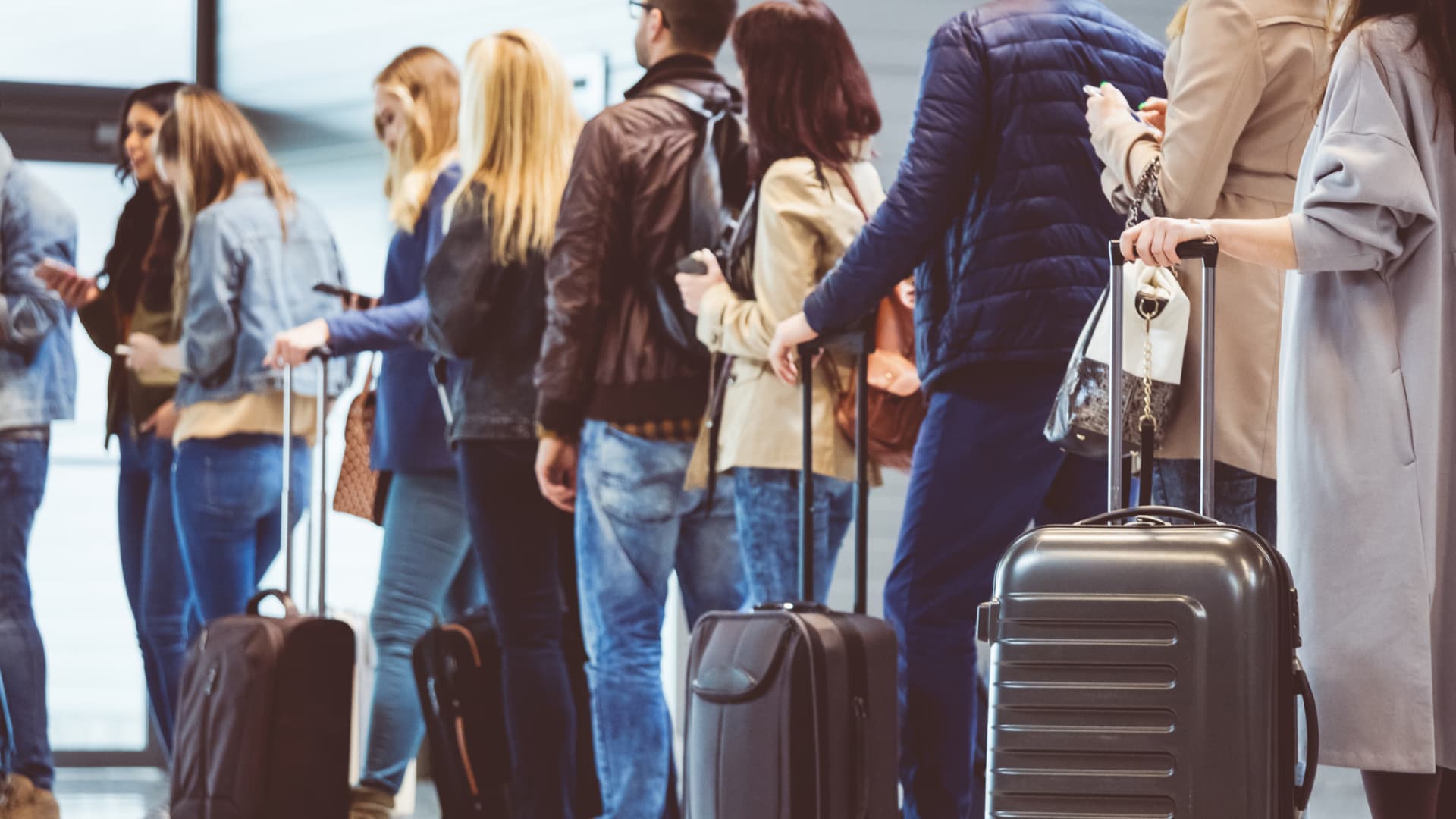
A record number of passengers flew in 2024.
Izusek | E+ | Getty Images
Southwest Airlines, once known for its first-come, first-served approach to boarding and seating, on Tuesday began selling its first tickets with assigned seats. That change — and with it, new boarding groups — goes into effect for flights in late January.
The move brings Southwest more in line with other major carriers, where travelers need to weigh the value of paying for an early-boarding upgrade.
“The number one reason to buy the early boarding upgrade is if you have a carry-on for the overhead bin,” said Sara Wilcox, an advisor at Fora Travel, a travel agency in New York City.
More from Personal Finance:
Trump floats tariff ‘rebate’ for consumers
Student loan forgiveness may soon be taxed again
What the Fed’s upcoming interest-rate decision could mean for your money
Priority boarding is “basically the race to get our carry-on suitcases in the overhead bins,” said Henry Harteveldt, founder of Atmosphere Research Group, a travel industry market research and advisory firm.
Understanding the boarding process
By law, individuals with disabilities who require special assistance must have the opportunity to board a flight first. Depending on an airline’s policy, other groups like active military members and families with young children may also be offered early boarding.
Beyond that, while the boarding process varies by airline, your spot among boarding groups will generally depend on your status with the airline and the kind of airfare you booked, experts say.
Individuals with elite airline status are typically among the first boarding groups, Harteveldt said. If you don’t have status and you bought a discounted or restricted coach fare, expect to be among the last to board.
If you fit an airline’s early boarding criteria, you might not need to pay for the perk.
Look for early-boarding add-on options
Travelers can sometimes buy early boarding as an add-on, either when you buy the flight or as your travel date approaches. Sometimes it’s bundled with other extras, too.
The cost of the add-on depends on the airline, and in some cases, how long the flight is, according to Sally French, a travel expert at NerdWallet.
For instance, the priority boarding add-on through United Airlines costs a flat rate of $24 per person.
“If overhead space is important to you, you do need to pay for priority boarding,” said French.
How co-branded travel credit cards can help
There are different ways to move up the boarding group ladder. Applying for and using an airline’s travel credit card can help you move closer to elite status, Harteveldt said.
Such cards typically include other perks like free or heavily discounted checked baggage fees. Before you apply, make sure to read and understand the card’s terms and conditions, as some charge high annual fees.
Remember that simply having the card is generally not enough to get the early-boarding benefits. You get the perk when you use the card to book that ticket.
‘You’re also bumped up’ through a premium airfare
Another way to board earlier is by booking a premium economy or main economy airfare, said French.
Doing so typically allows you to book a specific seat, and “you’re also bumped up in an early boarding position,” she said.
Premium economy “is a step up from economy,” but is not as costly as first or business class, according to Skyscanner, a travel site. In addition to more legroom, wider seats and more recline, these seats offer priority services for check-in and boarding.
But this is an expensive way to get on the plane sooner. Price-wise, a premium economy fare will likely be over 50% less expensive than a business class fare, but is at least 30% more expensive than standard economy, per Skyscanner.
If you have enough points or miles with an airline, you might be able to upgrade from economy to premium economy, per Skyscanner.
While “its not the worst use ever,” remember that you might not get more than one cent per mile, said Stella Shon, a senior features editor at UpgradedPoints, a travel site.
“Cash upgrades are where you get the most value,” she said. If not, assess where your points and miles will be the most valuable to you.

While paying to pick a seat can help you get a better boarding group, especially if you’re willing to pay for an extra legroom seat, you can forgo it. NerdWallet’s French said that passengers should not feel obligated to pay the added cost for early boarding.
If you simply paid for a flight — with or without seat reservations — the airline will assign a seat for you.
You’re just more likely to be placed in a middle seat towards the back of the plane, as well as being among the last passengers to board, she said.
“Just hope by the time you board there’s space in the overhead bin,” said Harteveldt.


Personal Finance
Next-Generation Retirement Planning: Managing Longevity Risk and Variable Income Streams


U.S.- Canada Trade Talks Collapse; Carney Says Retaliatory Tariffs Begin September 8

Flock Cameras and the Future of Public Security

AI Infrastructure Boom Hits Physical Limits: Power, Financing, and Supply Chain Strain

Armanino adds Strategic Accounting Outsourced Solutions

New 2023 K-1 instructions stir the CAMT pot for partnerships and corporations

Tax Strategy: Employee Retention Credit update
-

 Stock News1 week ago
Nvidia Earnings Preview: What Wall Street Expects From the AI Bellwether’s Q2 Report
-

 Accounting1 week ago
SEC’s Semiannual Reporting Proposal Faces Investor Pushback: What CFOs Need to Know
-

 Stock News1 week ago
Nvidia Q2 FY2027 Earnings beats Wall Street Expectation with Record $96.2 Billion Revenue
-

 Finance1 week ago
Treasury Bond Volatility Forces Bessent to Double Debt Buyback Size as Yields Swing
-
 Technology5 days ago
AI Infrastructure Boom Hits Physical Limits: Power, Financing, and Supply Chain Strain
-
 Technology3 days ago
Flock Cameras and the Future of Public Security
-
 Economics3 days ago
U.S.- Canada Trade Talks Collapse; Carney Says Retaliatory Tariffs Begin September 8