
Accounting
Trump expected to narrow Treasury chief options by week’s end

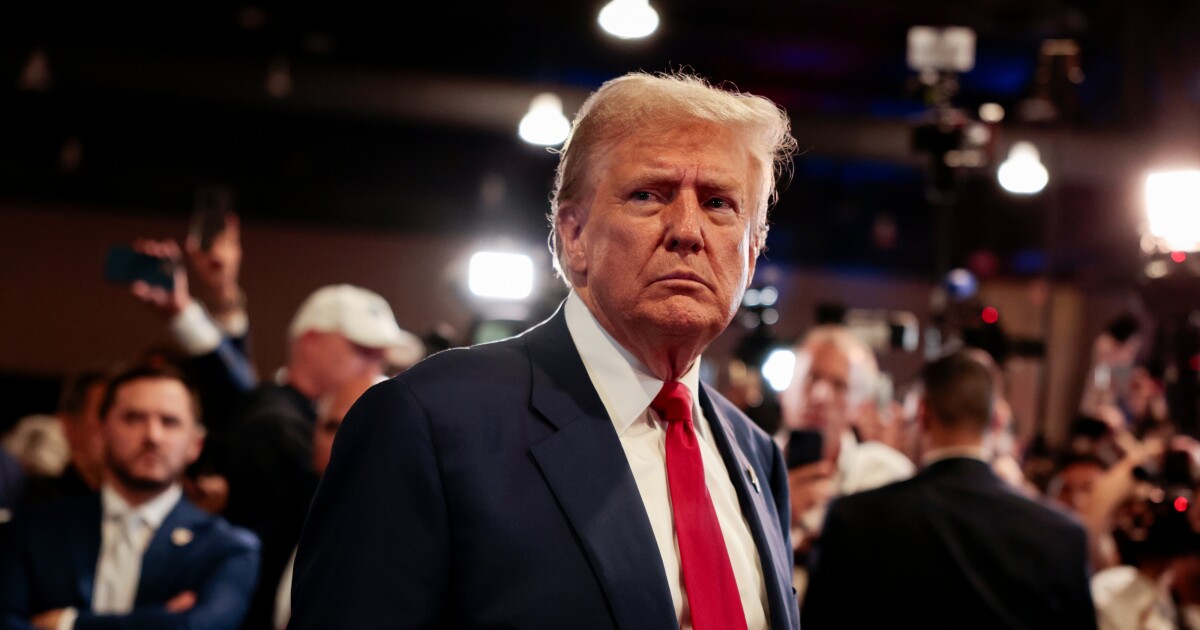
Donald Trump intends to narrow the shortlist of candidates for Treasury secretary this week and is leaning toward someone with a Wall Street pedigree for the job, according to people familiar with his plans.
Names that have been floated for the Treasury role include Howard Lutnick, chief executive officer of Cantor Fitzgerald LP, hedge-fund billionaire John Paulson, former George Soros money manager Scott Bessent and Virginia Governor Glenn Youngkin, a former Carlyle Group Inc. executive.
Bessent met with Trump at Mar-a-Lago on Friday, but the meeting was not an interview for Treasury, according to people familiar with the process.

Hannah Beier/Bloomberg
Trump’s transition planning is off to a quick start after the Republican notched a decisive win over Vice President Kamala Harris last week, allowing the president-elect to immediately pivot to selecting policy and personnel for his second White House stint.
Trump’s Wall Street allies are urging him to appoint someone with deep finance industry knowledge to serve as treasury secretary, advice that the president-elect’s team has indicated he’ll follow, according to people familiar with the process. A wide swath of tax breaks expire next year, giving Trump the opportunity to broadly shape fiscal policy as he did with his 2017 tax cuts.
Treasury secretary and secretary of state typically are the plum, high-profile jobs that presidents-elect fill first. Trump expressed such disdain and regret following his first term about his choice of Jeff Sessions for attorney general and Jim Mattis as secretary of defense that allies expect him to take those picks seriously.
Senator Bill Hagerty has been in the mix for both Treasury and State, but Trump’s team is reluctant to appoint senators to top jobs because they do not want to diminish the Republican margin in that chamber, even temporarily.
In most cases, governors appoint candidates to fill their state’s vacated Senate seats, a process that could leave Republicans down several members for weeks or months, potentially hobbling the GOP’s ability to pass legislation or approve Trump’s political appointees in the early days of his administration.
Help wanted
Job interviews will happen at Mar-a-Lago, Trump’s golf club in Palm Beach, Florida. He’s expected to receive lists of five to eight names for each cabinet job, with PowerPoint presentations about each person, according to people familiar with the process.
Next to each proposed pick is the name of who recommended him or her, giving Trump the ability to weigh how important the candidate is to his inner circle. Trump’s family members, donors and former White House aides have all submitted names for consideration.
“President-elect Trump will begin making decisions on who will serve in his second administration soon. Those decisions will be announced when they are made,” Trump spokesperson Karoline Leavitt said in a statement.
Already, Trump has appointed the first female White House chief of staff, Susie Wiles, who ran his campaign. She is expected to oversee the transition, pulling from the thousands of names that Lutnick, a transition co-chair, has compiled to fill the roughly 4,000 political-appointee jobs in the federal government.
Lutnick spent months meeting with members of Congress, donors, business executives, conservative leaders and former Trump administration officials to create a database to quickly name and fill Trump loyalists into key administration posts.
The jockeying for jobs has already spilled into public through leaks and counterleaks.
Robert Lighthizer, who served as Trump’s U.S. trade representative in the first term and is the architect of his sweeping tariff proposals, is also among the candidates for Treasury.
But a recent report in the Financial Times, which said Lighthizer had been offered the same job he previously held, was read by some involved in the process as an attempt to sideline him from the Treasury role. Trump did not offer him the USTR post, according to people familiar.
It’s possible Lighthizer — who has already begun creating plans for tariffs involving China and the European Union — will end up with a broad portfolio within the White House overseeing trade policy across the administration, people familiar with the process said.
Should Trump tap a finance industry veteran for his Treasury chief and give Lighthizer power over trade issues, policy battles are likely to play out the same way they did during his first term.
Back then, clashes of ideas often resulted in bitter fights that played out in the Oval Office in front of Trump — who likes those discussions to be part of his decision-making process — and sometimes with the press or foreign delegations present.
Linda McMahon, who is serving alongside Lutnick as a transition co-chair, is working with her staff to draft a series of executive orders Trump could issue on immigration, trade, energy and other areas in the early days of his administration, according to people briefed on the efforts.
The group is strategizing on how to pass another sweeping tax bill next year, the people said. McMahon, the former head of the Small Business Administration, is also in the running for the top job at the Commerce Department.
Trump will meet President Joe Biden at the White House on Wednesday — accepting an offer the former president didn’t extend following Biden’s 2020 win, when Trump contested the results.
Transition officials have suggested they’re prepared for large-scale turnover in the administration in 2026, which could coincide with Republicans losing some seats in Congress, making it more difficult to pass legislation. The goal is to complete the bulk of Trump’s agenda before the midterm elections, according to a person familiar with the matter.
A smaller Senate majority — or a Democratic-led chamber — in the latter half of Trump’s term could also make it more difficult to confirm new political appointees to administration jobs. The team is recommending to prioritize harder-to-confirm candidates in the first tranche of appointments and considering names for future rounds that may be more palatable to some Democrats.





S&P 500 September Outlook: Tech Rally Holds Index at 7,600

India Unveils ‘Saptadhara’ Reform Agenda Targeting Technology, Youth Skilling, and Growth

S&P 500 Outperforms Amid Strong Corporate Earnings as Treasury Yields Cap Equity Multiples

Armanino adds Strategic Accounting Outsourced Solutions

New 2023 K-1 instructions stir the CAMT pot for partnerships and corporations

Tax Strategy: Employee Retention Credit update
-

 Technology6 days ago
AI Infrastructure Boom Hits Physical Limits: Power, Financing, and Supply Chain Strain
-

 Economics4 days ago
U.S.- Canada Trade Talks Collapse; Carney Says Retaliatory Tariffs Begin September 8
-
 Stock News5 hours ago
S&P 500 September Outlook: Tech Rally Holds Index at 7,600
-

 Technology4 days ago
Flock Cameras and the Future of Public Security
-
 Finance5 hours ago
S&P 500 Outperforms Amid Strong Corporate Earnings as Treasury Yields Cap Equity Multiples
-

 Insights6 hours ago
Climate Resilience and Offshore Wind and Land Restoration Milestones
-

 Accounting6 hours ago
Mandatory ESG Reporting Standards Demand Standardized Non-Financial Audit Trails
-
 Leaders5 hours ago
India Unveils ‘Saptadhara’ Reform Agenda Targeting Technology, Youth Skilling, and Growth