
Accounting
Trump tax bill takes center stage as GOP debates cuts

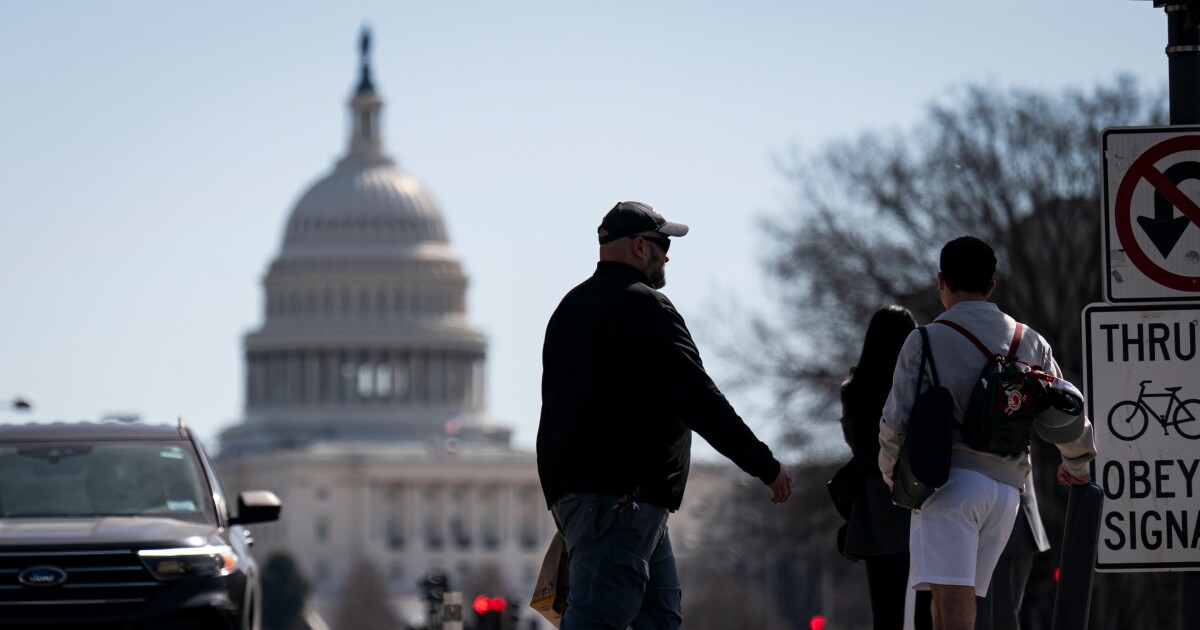

Congressional Republicans returning to Washington on Monday will tackle their toughest test yet, negotiating a massive tax bill package to deliver President Donald Trump a signature legislative victory.
Efforts to renew Trump’s landmark 2017 tax cuts and secure additional reductions he’s promised were temporarily sidelined while lawmakers worked to narrowly avert a government shutdown earlier this month.
The party can now shift its attention to the undertaking, aimed at cutting tax bills by trillions of dollars. The scope of that effort will require some difficult decisions and near unanimity as Republicans navigate narrow majorities in both chambers.
Republicans still must agree on the overall size of the package, which tax elements to include, and how — or if — to offset the cost, a controversial question that will pit the most ardent fiscal hawks against members seeking tax breaks.
Here’s a look at the challenges facing Republicans as they move on a critical legislative priority:
What’s the overall cost of the bill?
The action is centered in the Senate, where the first step is to decide on a topline figure for the bill.
House Republicans — in their version of the tax blueprint passed earlier this month — agreed to $4.5 trillion in tax cuts, paired with $2 trillion in spending reductions.
Both those figures have problems. Republicans have their eyes on cutting far more than $4.5 trillion in taxes. And cutting $2 trillion from the federal budget over a decade could mean making politically harmful cuts to popular programs like Medicaid.
But scaling up the tax break total, or downsizing the ambition for spending cuts, have the potential to spark the ire of House deficit hawks. Both chambers ultimately have to agree on those topline figures before the tax talks can advance.
What are the ways to offset that cost?
The realities of the math mean that Republicans have been looking for creative ways to offset the cost.
While certain factions of the party are demanding spending cuts, they can’t offset all their desired tax cuts by slashing the budget alone.
Republicans have discussed a small number of offsets — eliminating the carried interest tax break for hedge fund managers, expanding a tax on university endowments and limiting the amount of state and local taxes corporations can deduct.
They could include some of the cost savings from Elon Musk’s Department of Government Efficiency effort. Some conservatives are also demanding a repeal of green energy tax breaks signed into law by President Joe Biden.
Still, all of those combined would amount to just a fraction of the overall cost.
That’s led them to consider using a budget gimmick to claim that extending the 2017 tax cuts costs nothing — instead of the more than $4 trillion over a decade the nonpartisan Congressional Budget Office has estimated.
This untried accounting move known as using the “current policy baseline” rather than the “current law baseline” could let them count the renewal of the 2017 cuts as free, which gives them an additional $4.5 trillion — or whatever total the two chambers agree on — to reduce more taxes.
The difficulty in finding palatable ways to pay for the bill could stymie the Senate’s efforts on the budget outline, dragging work on the bill into the fall, said Erica York of the right-of-center Tax Foundation
What are the downsides of getting the tax cuts for ‘free’?
It’s not even clear that using current policy baseline is allowed under the Senate rules, something Republican aides have been discussing with the chamber’s rules keeper, parliamentarian Elizabeth MacDonough.
Arcane Senate rules also mean that using this baseline to extend existing tax rates will mean that each provision will need to have a tiny tweak so it registers a “fiscal impact.” That could result in some messy outcomes in the code.
Budget watchdogs are vehemently opposed to getting creative with the budget baseline.
“It lets you lie about what you are doing,” said Marc Goldwein of the Committee for a Responsible Federal Budget. “It will be a massive budget-buster over time.”
The Congressional Budget Office on Friday released
There are also risks with bond investors. Debt markets are watching if Congress has embarked on a precedent-breaking spree by bulldozing Senate guardrails.
“It basically tells financial markets and the bond markets we have really just given up on controlling deficits,” said Kent Smetters of the Penn Wharton Budget Model.
Further complicating matters, CBO will issue a new estimate of the timing of a possible U.S. federal debt default. That has the potential to speed up — or delay — the tax bill. House Republicans have pushed to include raising the debt limit in the tax package, where their colleagues in the Senate are still deciding whether to combine the issues or vote on them separately.
What, exactly, are these tax cuts?
Republicans broadly agree that the heart of the package will be the extension of the 2017 cuts, which include rate cuts for individual taxpayers and deductions for small business owners.
Beyond that, the tax cut wish list is long and growing. Trump wants to end taxes on tips, overtime pay and Social Security benefits. He’s floated a lower corporate rate for companies that manufacture domestically and vowed to make car loans deductible.
One of the most politically volatile is expanding the state and local tax deduction, known as SALT. A group of House Republicans from high-tax states have vowed to block the bill unless it includes a substantial increase to the $10,000 cap on the write-off.
There are also demands for new tax breaks. Most Senate Republicans want to end the estate tax and some are seeking to expand Opportunity Zone tax benefits — capital gains breaks for people who invest in developing areas.
“They are going to have to make some choices,” said PwC’s Rohit Kumar, a former top Senate GOP aide. “They will have to put in some revenue limits.”





Nvidia Q2 FY2027 Earnings beats Wall Street Expectation with Record $96.2 Billion Revenue

Treasury Bond Volatility Forces Bessent to Double Debt Buyback Size as Yields Swing

Nvidia Earnings Preview: What Wall Street Expects From the AI Bellwether’s Q2 Report

Armanino adds Strategic Accounting Outsourced Solutions

New 2023 K-1 instructions stir the CAMT pot for partnerships and corporations

Tax Strategy: Employee Retention Credit update
-

 Economics1 week ago
Nvidia’s Potential $3 Billion SB Energy Investment Could Reshape AI Infrastructure
-

 Economics4 days ago
Top 10 Largest Economies by 2030: IMF & World Bank GDP Projections for Global Powerhouses
-

 Stock News4 days ago
How to understand Intel $15B Stock Offering
-

 Technology1 week ago
U.S.-China AI Competition Intensifies as Washington Pushes Allies to Choose Sides
-
 Stock News1 day ago
Nvidia Earnings Preview: What Wall Street Expects From the AI Bellwether’s Q2 Report
-

 Economics4 days ago
Economic Profile of the United States of America (2026–2030 Horizon)
-
 Leaders3 days ago
Jackson Hole 2026: What the First Symposium Under Fed Chair Kevin Warsh Means for Markets
-

 Economics3 days ago
U.S. National Debt Surpasses $40 Trillion for the First Time: What It Means for the Economy