
Personal Finance
Trump’s ‘big beautiful bill’ cuts SNAP for millions of families: Report

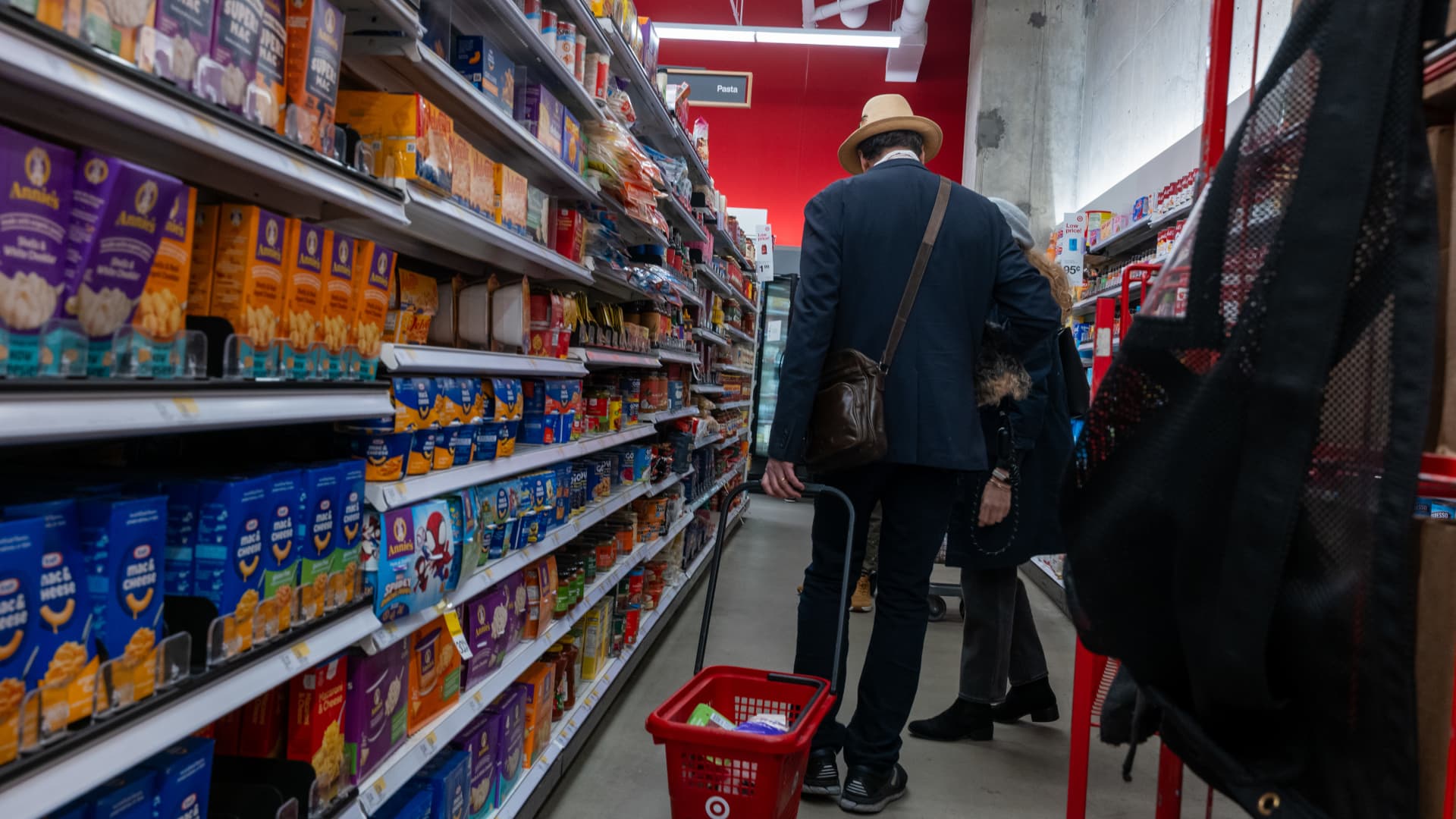
People shop at a grocery store in Manhattan, New York City, on April 1, 2025.
Spencer Platt | Getty Images
Republicans’ “big beautiful” reconciliation package includes tax cuts that policy researchers have found primarily benefit the wealthy.
To help pay for that, the legislation also includes “substantial” cuts to the Supplemental Nutrition Assistance Program, or SNAP, formerly known as food stamps, according to research from the Urban Institute.
The changes will cause 22.3 million families to lose some or all of their SNAP benefits, according to the institute, a nonpartisan provider of policy research. Its analysis is based on the legislation passed by the Senate, which the House did not change before voting for the bill, signed into law by President Donald Trump.
SNAP currently provides basic food assistance to more than 40 million people, including children, seniors and nonelderly adults with disabilities, according to the Center on Budget and Policy Priorities, a nonpartisan research and policy institute.
More from Personal Finance:
Tax changes under Trump bill — in one chart
Trump bill doesn’t eliminate taxes on Social Security benefits
What endowment tax in Trump bill may mean for your college tuition
Of the 22.3 million families who will be affected by the legislation’s changes, 5.3 million would lose at least $25 per month in SNAP benefits, according to Urban Institute’s analysis.
On average, those families would lose $146 per month in SNAP support, the Urban Institute found.
The Congressional Budget Office has estimated the changes in the Senate reconciliation bill would cut SNAP funding by about 20%, or $186 billion through 2034. That makes it “the largest cut to SNAP in history,” according to the Center on Budget and Policy Priorities.
How the ‘big beautiful bill’ cuts SNAP benefits
Currently, many individuals are limited to three months of SNAP benefits every three years unless they are working for 20 hours per week or qualify for an exemption.
The new legislation will expand those requirements to individuals ages 55 through 64, parents of minor children ages 14 and up and veterans. It is unclear when those new rules go into effect.
Those new work requirements may throw even working people who qualify off benefits if they do not report their eligibility properly, according to Elaine Waxman, senior fellow at the Urban Institute.
Around 3.5 million working families, who have at least one family member working during the year, would lose at least $25 per month in benefits, or $108 per month on average, Urban Institute’s research estimates.
That estimate is based on families who may not consistently meet the required work hours, according to Waxman. However, because additional households may lose eligibility if they fail to properly comply with the administrative process, the total could be higher, she said.

Additionally, the legislation requires states to pay for a portion of benefit costs, ranging from 5% to 15%, if their payment error rate is at or over 6%. The error rates measure the accuracy of states’ eligibility and benefit payments. In fiscal year 2024, states had a 10.9% average payment error rate, with many states over 6%, according to the Department of Agriculture.
States that can’t pay those shares may have to cut SNAP benefits or opt out of the program entirely, according to the Center on Budget and Policy Priorities.
While states will have until 2028 to start helping to pay for SNAP benefits, they will likely be aggressive in getting their error rates down sooner, according to Waxman.
“I think that we will start to see SNAP declines for administrative reasons in the near future as states struggle with that,” Waxman said. “I do think the effects will be felt sooner.”
Even if families’ eligibility for SNAP hasn’t changed, they could fall off the program if they fail to get recertified for benefits, which can lead to hardship, Waxman said.
Children who are eligible for SNAP may also see cuts in school meals and in summer EBT, or electronic benefits transfer, food benefits, according to CBPP.
The law also limits SNAP eligibility to U.S. citizens and lawful permanent residents.
How SNAP cuts affect the economy
Every dollar spent on SNAP generates $1.54 in benefit for local economies, according to 2019 research from the U.S. Department of Agriculture’s Economic Research Service.
“People do spend SNAP dollars right away,” Waxman said, which helps grocery stores, producers, processors and transportation companies.
Those funds can help to support hiring even during downturns, she said.
However, following the new law, states may be more likely to cut benefits during a recession if their budgets are stretched, according to CBPP.
“Typically, in a recession, more people need SNAP and the rolls go up,” Waxman said.
If the changes under the new law prompt the program’s administrative capacity to become stressed, SNAP may not be as well suited to respond to people’s needs as it has been in the past, she said.


Personal Finance
Next-Generation Retirement Planning: Managing Longevity Risk and Variable Income Streams


U.S.- Canada Trade Talks Collapse; Carney Says Retaliatory Tariffs Begin September 8

Flock Cameras and the Future of Public Security

AI Infrastructure Boom Hits Physical Limits: Power, Financing, and Supply Chain Strain

Armanino adds Strategic Accounting Outsourced Solutions

New 2023 K-1 instructions stir the CAMT pot for partnerships and corporations

Tax Strategy: Employee Retention Credit update
-

 Stock News1 week ago
Nvidia Earnings Preview: What Wall Street Expects From the AI Bellwether’s Q2 Report
-

 Accounting1 week ago
SEC’s Semiannual Reporting Proposal Faces Investor Pushback: What CFOs Need to Know
-

 Stock News1 week ago
Nvidia Q2 FY2027 Earnings beats Wall Street Expectation with Record $96.2 Billion Revenue
-

 Finance1 week ago
Treasury Bond Volatility Forces Bessent to Double Debt Buyback Size as Yields Swing
-
 Technology5 days ago
AI Infrastructure Boom Hits Physical Limits: Power, Financing, and Supply Chain Strain
-
 Technology3 days ago
Flock Cameras and the Future of Public Security
-
 Economics3 days ago
U.S.- Canada Trade Talks Collapse; Carney Says Retaliatory Tariffs Begin September 8