
Personal Finance
What to know about flash floods and homeowners insurance

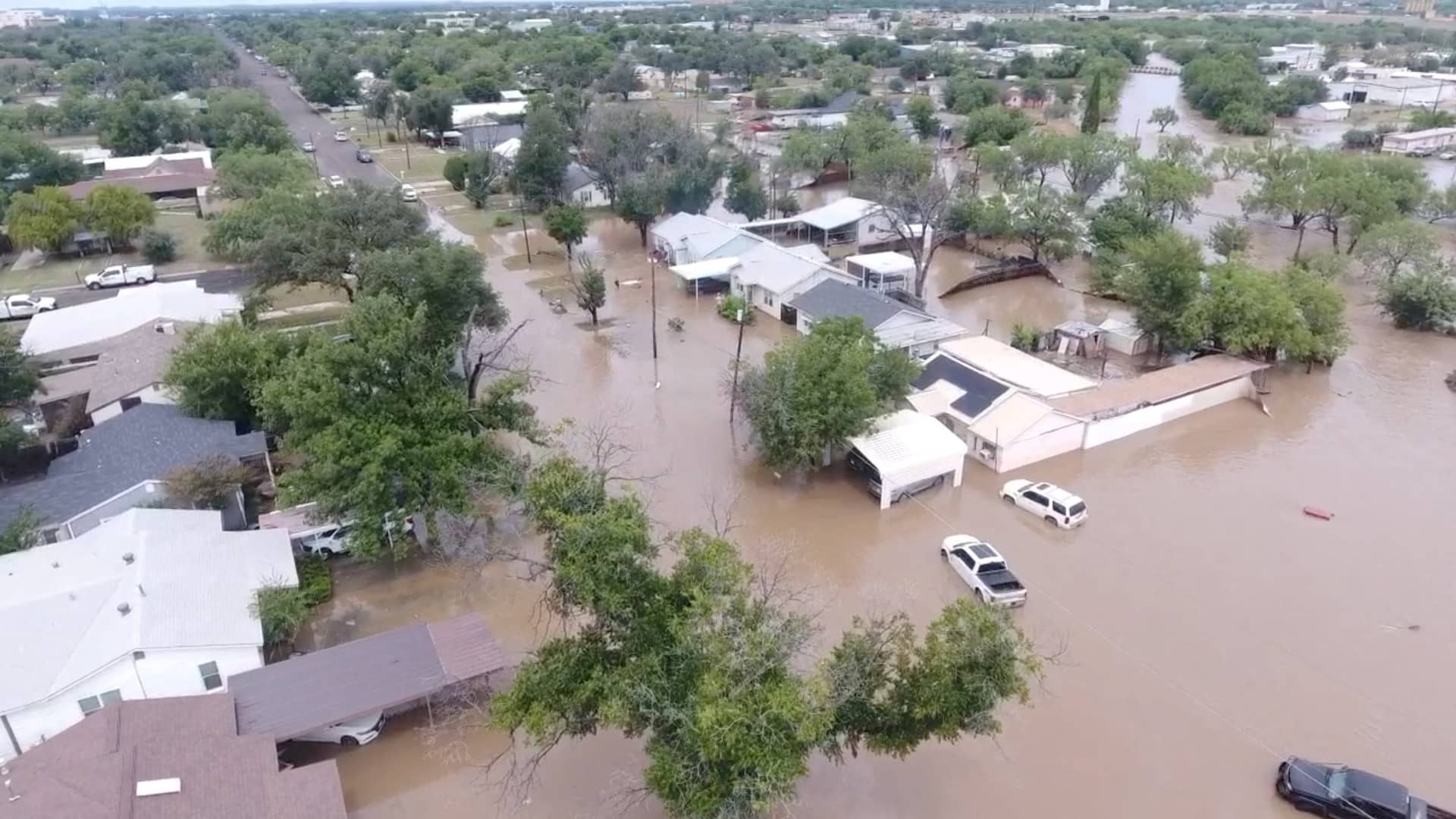
A drone view shows flooded houses, following torrential rains that unleashed flash floods along the Guadalupe River in San Angelo, Texas, on June 4, 2025, in this screen grab obtained from a social media video.
Patrick Keely | Patrick Keely Via Reuters
‘Every home can be exposed’
Texas is one of the most flood-prone areas in the U.S., Worters said — flash floods, river overflows and tropical storms result in billions of dollars in insured losses per year.
“Flooding in Texas has become a growing threat,” she said.
But it’s a nationwide risk. Over the past 20 years, 99% of U.S. counties have experienced a flood event, according to the National Flood Insurance Program by the Federal Emergency Management Agency. About 40% of NFIP claims are from outside high-risk zones.
While floods can be bigger risks in areas near bodies of water, they can happen anywhere, “even on a mountaintop,” Worters said.
“Every home can be exposed,” she said.
For example, in 2024, Hurricane Helene caused massive flooding in mountainous areas such as Asheville, North Carolina. Less than 1% of households there were covered by the NFIP, according to a report by the Swiss Re Institute.
Parts of central North Carolina also experienced flash floods over the July Fourth weekend, as Tropical Storm Chantal made its way inland. “This historic weather event caused flooding like we haven’t seen in several decades in the central part of the state,” Joey Hopkins, North Carolina’s transportation secretary, said in a press release Tuesday.
Why homeowners insurance doesn’t cover floods
Insurers tend to avoid covering risks that produce “highly correlated losses” that can be “catastrophic in nature,” said Daniel Schwarcz, a law professor at the University of Minnesota Law School who focuses on insurance law and regulation. Floods are one such disaster, as are earthquakes.
“When it affects one person dramatically, it often affects many, many people dramatically,” he said.
About 90% of all presidentially declared U.S. natural disasters involve flooding, per FEMA.

Residents might have water damage coverage included in their homeowners policy, which can cover events such as pipe bursts, said Karl Susman, president and principal insurance agent of Susman Insurance Services, Inc. in Los Angeles.
But such provisions do not cover damage from rising water levels, experts say.
“When you have sudden, intense flooding that’s caused by heavy rain in a short period of time, that’s a flash flood,” Worters said. “That’s something that would not be covered on your regular homeowners [policy].”
Where to get flood insurance
Because standard policies often explicitly exclude flooding, if you want coverage, you’ll need a standalone policy.
You can get flood insurance from FEMA’s NFIP, which is considered the primary source of flood coverage in the U.S. The NFIP typically covers up to $250,000 in damages to a residential property and up to $100,000 on the contents.
As of 2024, the NFIP has more than 4.7 million flood insurance policies in force, providing coverage in excess of $1.28 trillion, according to FEMA.
If you have an expensive home or expect more severe damage to your property, consider asking an insurance agent about so-called “excess flood insurance,” Worters said. Such policies are written by private insurers that cover losses over and above what’s covered by the NFIP, she said.
If you decide to get coverage through the NFIP, keep in mind that there is usually a 30-day waiting period before the new policy goes into effect.
NFIP may not be your only option. Some private insurers now offer standalone flood insurance policies as risk modeling and actuarial projections — or financial estimates for future events — have improved, said Worters.
According to a recent report by LendingTree using 2023 nationwide data from S&P Global, the average cost for private flood insurance is $98 a month. A separate report by NerdWallet using 2025 NFIP rates found that the average flood insurance through FEMA costs $75 a month.
Keep in mind, however, that the price you pay for coverage will depend on factors including where you live. Compare all the options available to you in your area, as they can be “drastically different” in cost, said Susman.
Schwarcz said homeowners can sometimes get cheaper policies through private insurance companies as they use different mechanisms from the NFIP.
“You want to look in both places,” he said.


Personal Finance
Next-Generation Retirement Planning: Managing Longevity Risk and Variable Income Streams


U.S.- Canada Trade Talks Collapse; Carney Says Retaliatory Tariffs Begin September 8

Flock Cameras and the Future of Public Security

AI Infrastructure Boom Hits Physical Limits: Power, Financing, and Supply Chain Strain

Armanino adds Strategic Accounting Outsourced Solutions

New 2023 K-1 instructions stir the CAMT pot for partnerships and corporations

Tax Strategy: Employee Retention Credit update
-

 Stock News1 week ago
Nvidia Earnings Preview: What Wall Street Expects From the AI Bellwether’s Q2 Report
-

 Accounting1 week ago
SEC’s Semiannual Reporting Proposal Faces Investor Pushback: What CFOs Need to Know
-

 Stock News1 week ago
Nvidia Q2 FY2027 Earnings beats Wall Street Expectation with Record $96.2 Billion Revenue
-

 Finance1 week ago
Treasury Bond Volatility Forces Bessent to Double Debt Buyback Size as Yields Swing
-
 Technology5 days ago
AI Infrastructure Boom Hits Physical Limits: Power, Financing, and Supply Chain Strain
-
 Technology3 days ago
Flock Cameras and the Future of Public Security
-
 Economics3 days ago
U.S.- Canada Trade Talks Collapse; Carney Says Retaliatory Tariffs Begin September 8