
Finance
Trump’s next Fed chair pick already comes with a credibility problem

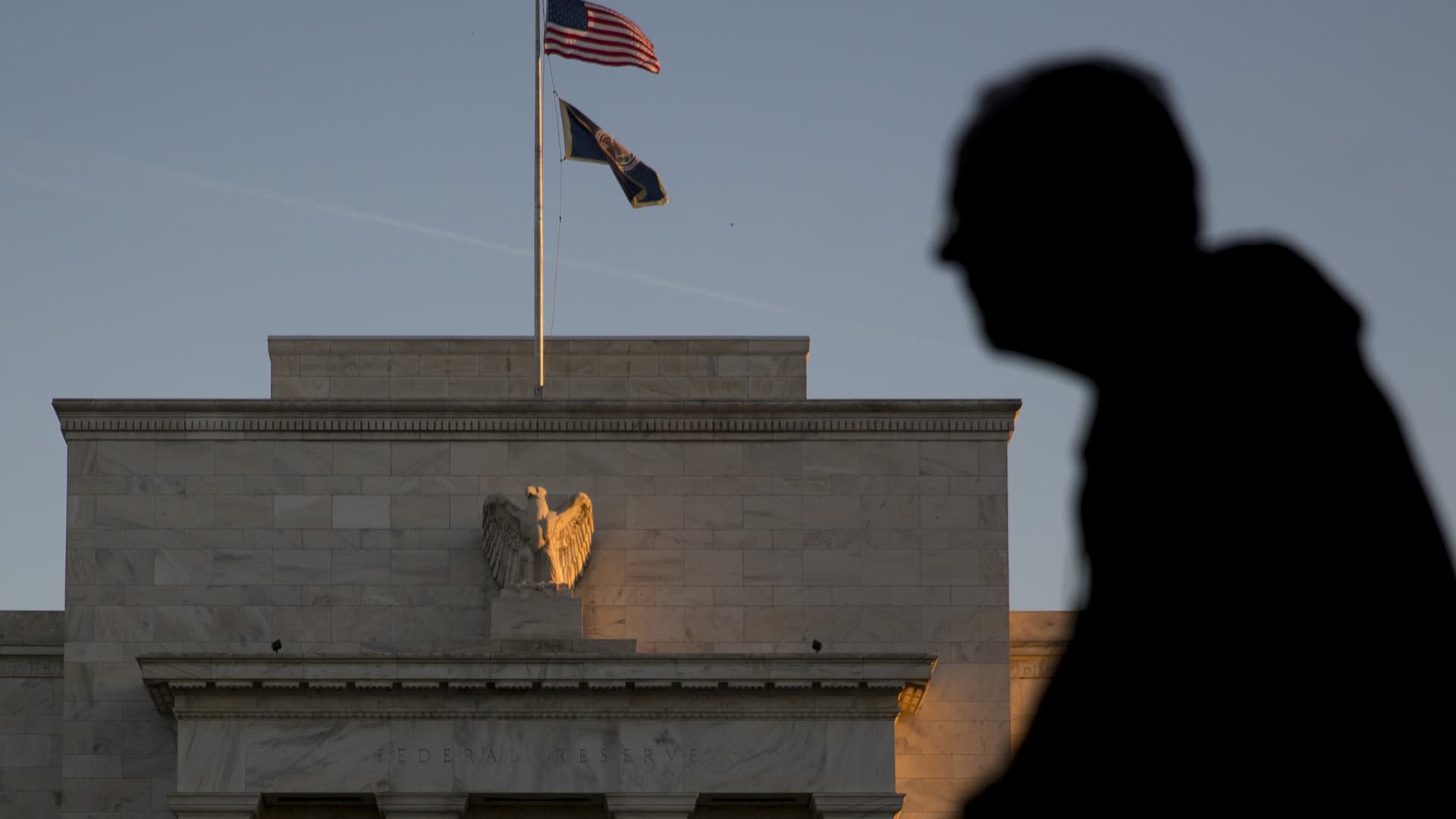
The silhouette of a pedestrian is seen walking past the Marriner S. Eccles Federal Reserve building in Washington, D.C
Andrew Harrer | Bloomberg | Getty Images
If leading the Federal Reserve isn’t challenging enough, the next central bank chair faces an additional burden: credibility issues now that President Donald Trump has stepped up efforts to exert a heavy hand on monetary policy.
Whoever the successful candidate is could carry the specter of being there simply to do Trump’s bidding on interest rates, violating the Fed’s traditionally apolitical veneer.
To exert more influence in the near term, Trump reportedly is considering naming a “shadow chair” until the current occupant, Jerome Powell, leaves office next year, in an attempt to pressure the Fed into cutting rates.
The prospect leaves a series of thorny questions.
Beyond the awkward logistics of such an arrangement, there are potentially troublesome implications both institutionally for the Fed and for financial markets that count on it to make data-driven decisions free of outside influence.
“Naturally, this is an idea that leaves many investors feeling uneasy,” Dario Perkins, senior European economist at TS Lombard, said in a note Tuesday titled “Can We Trust the Next Fed Chair?” “Suddenly all the talk is of the Fed ‘losing independence’ and of there being a new era of ‘fiscal dominance’ – not helped by the fact that Trump is explicitly linking his demand for lower rates to reducing debt-servicing costs.”
Indeed, Fed officials generally make decisions in service to their twin goals, or “dual mandate,” namely to promote stable inflation or full employment.

What Trump has been demanding is different — he has been hectoring Powell and his fellow Federal Open Market Committee officials, in increasingly belligerent terms, to cut rates to lower financing costs for the government’s ever-burgeoning debt load. Trump insists the Fed could save taxpayers some $800 billion by aggressively lowering its overnight funds rate, which currently sits at 4.33%.
Powell and his predecessors have repeatedly held the line that the public fiscal situation does not and will not play a role in rate decisions. Veering outside the traditional Fed decision-making parameters would pose further questions for the next chair’s credibility.
Advantages and disadvantages
“The real loser here is not Jay Powell but his successor,” Perkins wrote. “We don’t even know who that person is, and already there are strong doubts about their integrity and what sort of ‘deal’ they have made to secure the position. But it seems pretty clear that Powell’s replacement will come with a ‘tacit understanding’ to cut rates.”
To be sure, central bank experts acknowledge that there is some benefit to Trump wanting to get ahead of the game in naming the next Fed chair.
Powell’s term as chair ends in May 2026, so nominating a replacement perhaps a few months early would give the prospective nominee the chance to get through the Senate confirmation process and bone up on the myriad responsibilities that the position carries.
But Trump’s idea is different.
Such a “shadow chair,” under the market’s understanding and in conjunction with statements that Trump and his lieutenants have made on the matter, would be in place almost explicitly to undermine Powell. Should Powell not budge on pushing for rate cuts, the shadow chair could simply make public statements contrary to that position.
However, finding a candidate to fill that role might not be so easy considering the reputational risks.
“From the perspective of the nominee, there’s nothing good about being nominated far out in advance and being expected to serve as a shadow Fed chair. That can only end poorly,” said Lev Menand, an associate professor of law at Columbia Law School and author of the 2022 book, “The Fed Unbound: Central Banking in a Time of Crisis.”
“It could lead to reputational harm. It could lead to pressure on you to say or do things in the run up to actually taking office that you don’t want to say or do,” he added. “It could lead to your nomination being yanked. It could lead to all sorts of bad things. So there’s nobody who’s seeking the Fed chair job who’s going to want to be put up early, except someone who’s told you won’t otherwise get it.”
Markets might not like it
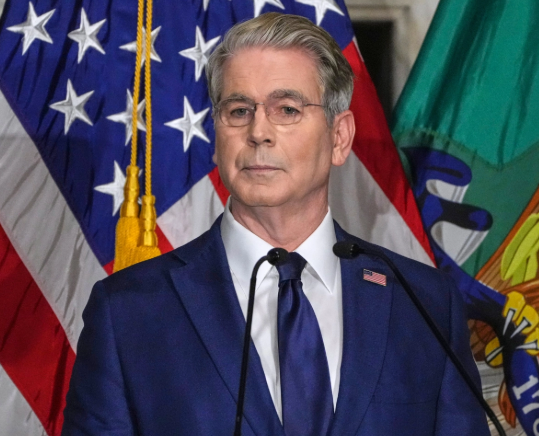
Treasury Secretary Scott Bessent has been mentioned prominently as a potential Powell replacement, along with several others.
In an Oct. 9, 2024, interview with Barron’s, less than a month before Trump’s election victory, Bessent said, “You could do the earliest Fed nomination and create a shadow Fed chair.” In such a case, “no one is really going to care what Jerome Powell has to say anymore.”
How financial markets would react to such a scenario is unclear. However, Wall Street is notorious for disliking uncertainty, especially with something as sensitive as monetary policy.
The last time the Fed cut rates, in late 2024, stocks rose but so did Treasury yields while the dollar fell. Rate cuts on the scale Trump is seeking — 2 percentage points or even more — could stoke inflation fears and send Treasury yields higher again.

“A good case could be made for nominating the next Fed chair a few months before the handover in May 2026,” Krishna Guha, head of global policy and central bank strategy at Evercore ISI, said in a recent note. “But nominating the next Fed chair now with the expectation that this person would be an active alternative voice on monetary policy for the best part of year would confuse the market, making it harder for the Fed to shape rate expectations and potentially … in ways that would not help advance rate cuts.”
Trump has a further set of logistics to navigate as he pushes his desire for lower rates.
Rate cuts aren’t certain
There is only one upcoming vacancy on the board of governors, with Adriana Kugler’s term up at the end of January 2026.
Powell’s time as chair runs out in May 2026, but he can stay on as governor until 2028. In the past, most Fed chairs have stepped down after the time at the helm ended; should Powell not go that route, he would then force Trump to name a current sitting governor as his successor, eliminating presumptive candidates such as Bessent, former Governor Kevin Warsh and current National Economic Council leader Kevin Hassett.
Moreover, the chair is just one voter out of 12 on the Federal Open Market Committee. While there currently are disparate views from policymakers on how quickly rates should come down, there are no members who have indicated they support the kind of cuts Trump seeks.
Investors will get a further peek into the Fed’s thinking when minutes of the June FOMC meeting are released Wednesday.
“This is all somewhat unprecedented how things would develop,” Menand said. “But I think that it’s safe to say that depending on how it’s rolled out, it could really ultimately unsettle expectations and change how some of these dynamics unfold in the fall.”
Markets expect the Fed will start cutting again in September, but the path from there is unclear. Should Trump name the shadow chair in the fall, it comes with the risk of both unsettling markets, and of causing problems for whomever he picks.
“Depending on who it is, it could have no effect, really at all, on Powell’s ability to govern for the remainder of his term, or it could actually be quite disruptive,” Menand added. “What would actually happen if the person was named in advance? The devil would be in the details.”




Dario Amodei’s Call to Pace the AI Frontier and Its Market Ripple Effects

Rising Oil Prices And Persistent Inflation Complicate Fed Decision

Bridging the AI Skills Gap: How Gen Z Youth Demographics Are Transforming the Workforce

Armanino adds Strategic Accounting Outsourced Solutions

New 2023 K-1 instructions stir the CAMT pot for partnerships and corporations

Tax Strategy: Employee Retention Credit update
-
 Economics1 week ago
U.S. Inflation Outlook for 2027
-

 Economics5 days ago
Economic Profile of the superpower of western Europe
-

 Economics5 days ago
Sovereign Bond Yield Volatility and Inflationary Shocks Challenge Global Central Banks
-

 Finance5 days ago
Big Tech Enterprise Borrowing Reaches $135 Billion as Hyperscalers Fund AI Infrastructure
-
 Economics2 days ago
Rising Oil Prices And Persistent Inflation Complicate Fed Decision
-

 Accounting2 days ago
Embedded AI and Automated Anomaly Detection Reshape Modern Corporate Accounting Frameworks
-
 Insights2 days ago
Bridging the AI Skills Gap: How Gen Z Youth Demographics Are Transforming the Workforce
-
 Leaders22 hours ago
Dario Amodei’s Call to Pace the AI Frontier and Its Market Ripple Effects