
Personal Finance
Warren Buffett’s S&P 500 bet paid off. Some experts say it may be time to diversify

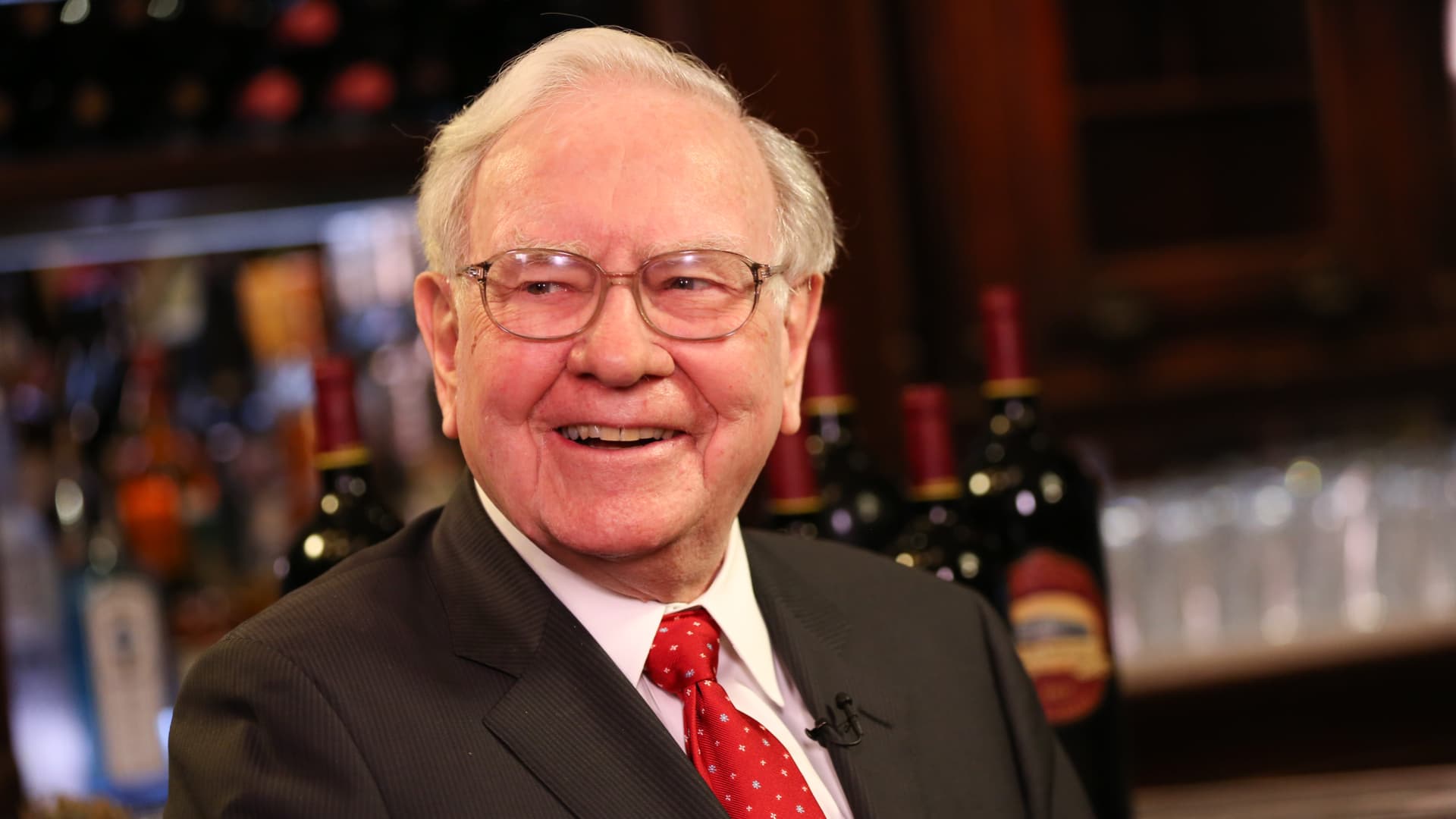
Warren Buffett, Berkshire Hathaway CEO and chairman.
Cnbc | Nbcuniversal | Getty Images
In 2007, Warren Buffett made a $1 million bet that he could outperform hedge fund managers over the course of a decade by investing in an S&P 500 index fund.
Some individual investors are making similar bets on the S&P 500 with their money, whether it be through exchange-traded funds or mutual funds.
True to its name, the S&P 500 index includes 500 large U.S. companies. The index is market cap-weighted, with each listed company’s weighting based on the total value of all its outstanding shares. The index is rebalanced quarterly.
The three biggest ETFs track the S&P 500 index, according to Morningstar. They are the SPDR S&P 500 ETF Trust, which trades under the ticker SPY; iShares Core S&P 500 ETF, with ticker IVV; and Vanguard S&P 500 ETF, which trades as VOO. Together, those funds make up almost 17% of the U.S. ETF market, according to Morningstar.
In 2024, VOO has been the leader of those three funds in attracting new money, with $71 billion in net inflows over the first nine months, according to Morningstar, beating the record SPY set in 2023 by $20 billion.
Future index performance could be ‘muted’
The S&P 500 index has continued to make headlines for new all-time highs in 2024. Year to date, the index is up around 20% as of Oct. 8. Over the past 12 months, it has climbed 33%.
That performance has bested some experts’ predictions for the index heading into this year, owing in part to a stronger U.S. economy than had been anticipated.
“That elusive recession everybody was looking for never materialized,” said Larry Adam, chief investment officer at Raymond James.
Now, the St. Petersburg, Florida-based firm is predicting a soft landing for the U.S. economy. Yet the run-up in stocks may not be as strong.
“I think you’re going to see more muted performance — still upward, but more muted,” Adam said.

Historically, from the start of October through Election Day, the market tends to be down, on average, by about 1.5% or so, he said.
“The reason for that is the market doesn’t like uncertainty,” Adam said.
The good news is the market tends to recoup those losses and move higher, he said.
Goldman Sachs just raised its S&P 500 index forecast for 2024 to 6,000 up from 5,600 to reflect expected earnings growth. Tom Lee, Fundstrat Global Advisors managing partner and head of research, also recently told CNBC he’s calling for a target of 6,000 for the S&P 500 by year-end.
S&P 500 ‘hard to beat in the long run’
Investing in the S&P 500 index is a popular strategy.
“There are reasons why it works so well that will never change,” said Bryan Armour, director of passive strategies research at Morningstar.
Among the advantages: It’s low cost, it captures a large portion of the opportunities available to active managers and it’s “hard to beat in the long run,” he said.
“In general, I would say the S&P 500 is better, more well diversified than most investment strategies,” Armour said.
That can allow you to take a set-it-and-forget-it approach and avoid trying to time the market, he said.
However, there are definite risks that come with exclusively investing in an S&P 500 index fund on the equity side of a portfolio.
“The S&P 500 has been the absolute best thing [investors] could have been doing the past seven or eight years,” said Sean Williams, a certified financial planner and principal at Cadence Wealth Partners in Concord, North Carolina.
“There’s a lot of people who have that mentality of, ‘Why would I do anything differently?'” he said.
Generally, it is not a good idea to have everything in any one position, even if it is big U.S. companies that have done very well in the past decade, Williams said.
It always helps to have exposure to other areas, he said, such as international, small- and mid-cap companies, and real estate, for example.
Investing in an S&P 500 index strategy comes with concentration risk. For example, information technology comprises 31.7% of the index, with companies including Apple, Microsoft, Nvidia and Broadcom.
To mitigate that risk, investors may consider moving to a total market portfolio like the Vanguard Total Stock Market ETF, which trades under the ticker symbol VTI, which can provide less concentration at the top of the portfolio, Armour said.
Additionally, to get broader exposure, investors may also consider buying a small value ETF, an area that Morningstar analysts currently think is “pretty significantly undervalued,” Armour said.


Personal Finance
Next-Generation Retirement Planning: Managing Longevity Risk and Variable Income Streams


U.S.- Canada Trade Talks Collapse; Carney Says Retaliatory Tariffs Begin September 8

Flock Cameras and the Future of Public Security

AI Infrastructure Boom Hits Physical Limits: Power, Financing, and Supply Chain Strain

Armanino adds Strategic Accounting Outsourced Solutions

New 2023 K-1 instructions stir the CAMT pot for partnerships and corporations

Tax Strategy: Employee Retention Credit update
-

 Stock News1 week ago
Nvidia Q2 FY2027 Earnings beats Wall Street Expectation with Record $96.2 Billion Revenue
-
 Technology5 days ago
AI Infrastructure Boom Hits Physical Limits: Power, Financing, and Supply Chain Strain
-
 Technology3 days ago
Flock Cameras and the Future of Public Security
-
 Economics3 days ago
U.S.- Canada Trade Talks Collapse; Carney Says Retaliatory Tariffs Begin September 8