
Accounting
Water ‘Ponzi’ that burned Jefferies had something for everyone, until it didn’t

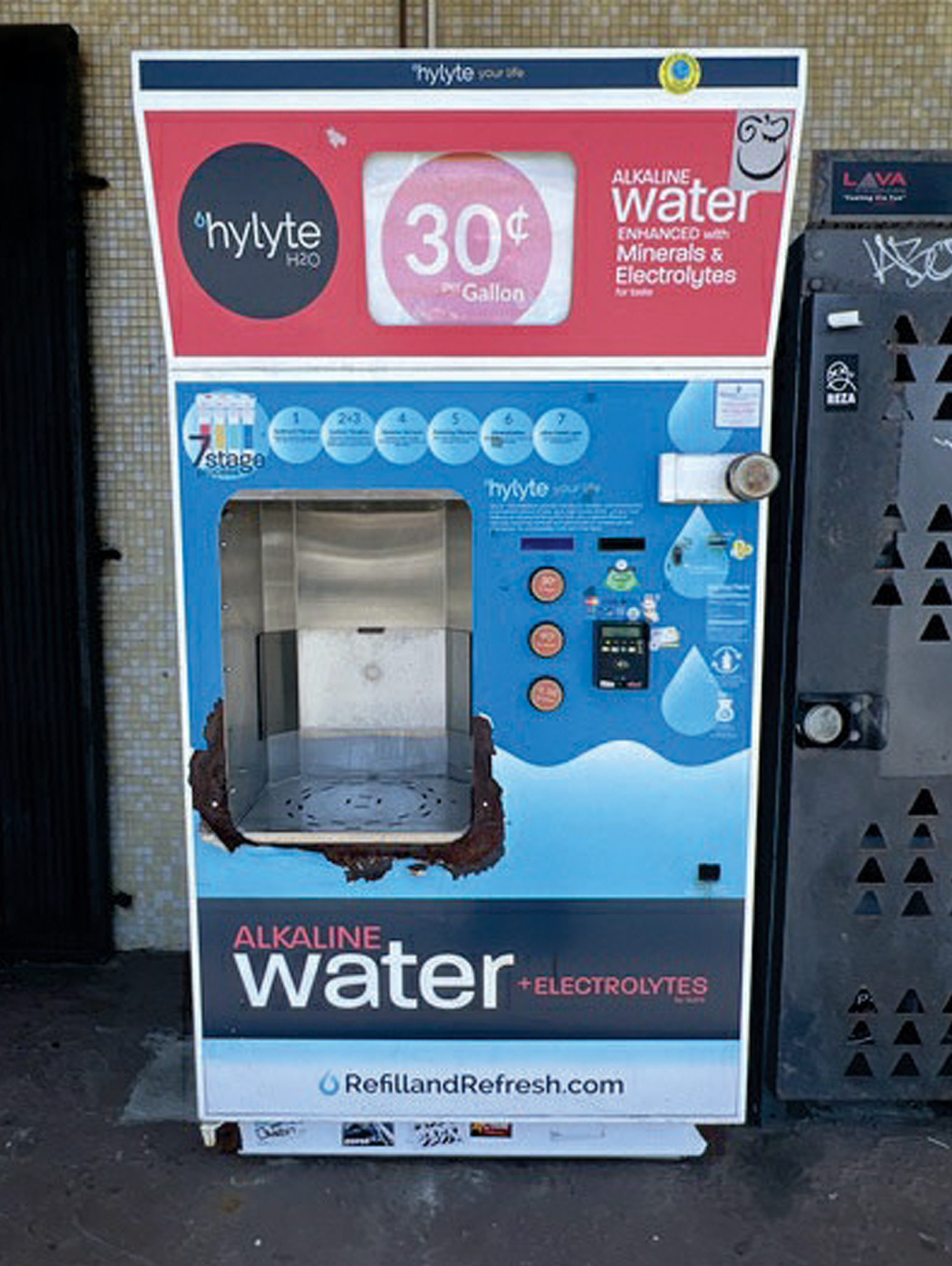
The pitch went like this: Good, safe drinking water has become such a scarce resource that Americans will pay to fill up jugs — 30 or 40 cents to the gallon — at dispensers all across the country.
Hundreds of investors bought thousands of units, believing in the vision laid out by Ryan Wear, founder of a startup called WaterStation Management. They plunked down $8,500 for each vending machine and then waited for the dispensers to throw off a steady stream of cash. Among those lured in was a product manager in Oregon in 2021 and then, several months later, a dentist in Illinois. Each bought dozens of water dispensers, which Wear’s team would install and operate.
What they didn’t know is that at least one of those Hylyte-branded machines wound up being sold to both of them: serial number 101962, wedged in between a liquor store and a yoga studio in a strip mall in the Los Angeles suburb of Torrance, according to court records. To make matters worse, a machine with that same serial number was also pledged as collateral to back WaterStation bonds that were sold in April 2022 to the investment bank Jefferies Financial Group Inc.
Serial number 101962, faded and rusted in pictures submitted to court, is now gone from that strip mall, WaterStation is in
“This case involves a massive Ponzi scheme,” Assistant U.S. Attorney Justin Rodriguez told a federal judge in Manhattan Wednesday after Wear pleaded not guilty to
Voluminous legal filings describe a business that drew in military veterans, stock traders, pharmacists, salespeople and retirees by leveraging growing fears about contaminated tap water and microplastics and offering a lucrative solution that would churn out annual returns as high as 20%, year after year. That desire to make easy money, coupled with clever marketing and alleged diligence lapses, kept the sputtering business going until the money finally stopped flowing around June 2023, according to court documents.
“These schemes never arise in a vacuum,” said John Bender, a lawyer who is representing a committee of WaterStation creditors. “The tragic consequences of the WaterStation affair could have been avoided had it not been for a cabal of insiders and institutions that prioritized their greed over doing the right thing even if it meant devastating the lives of a lot of people.”
Earlier this month, the committee asked a judge overseeing the proceedings to rule that Wear’s business meets the legal definition of a Ponzi scheme — a type of operation that uses new money to pay returns of existing investors or other creditors, with promoters usually promising high returns for little risk. If granted, franchisees would likely get tax relief and advisors would have an easier time clawing back funds from entities that profited off WaterStation’s business, which “will lay the groundwork for future recoveries on behalf of victims of this Ponzi,” according to the committee’s filing.”
Machine mismatch
Formed in 2016 in Everett, Washington, WaterStation Management sold upwards of 21,000 machines and raised more than $380 million over the course of some seven years. Growth was fueled by a handful of banks that issued loans backed by the U.S. Small Business Administration, as well as about $100 million in bonds bought by a fund run by Jefferies. Wear claimed in a 2023 deposition that his business had more than 500 employees.
In actuality, Wear’s firm only deployed roughly 2,100 machines, many likely never existed at all and most of the money WaterStation raised paid other costs or payments to existing franchisees, according to court records. Many dispensers that do exist were sold to multiple buyers — like the one that was in Torrance — or were promised as Jefferies’ collateral. Serial numbers on other machines don’t correspond with addresses investors were given by the company, court papers indicate. Determining who owns each machine and who bears responsibility for the alleged scheme is being fought over in federal court.
To locate machines that were sold more than once, Bloomberg News analyzed thousands of serial numbers submitted in court by creditors with claims to WaterStation machines and more than a dozen investor lawsuits that have piled up. Restructuring advisers say in court papers that more than 10,000 water machines were sold to multiple purchasers.
Falling behind
WaterStation had trouble paying franchisees for years before monthly payments stopped completely two years ago, according to Becky Yang O’Malley, a GlassRatner Advisory Services managing director and certified fraud examiner retained by a committee representing WaterStation franchisees and other creditors. Franchisees have sued WaterStation and Wear, who along with Chirico, was sued by the Jefferies fund, while banks have sued franchisees who have fallen behind on business loans, according to court records. Jefferies has also sued one lender, First Fed Bank, alleging it helped keep WaterStation afloat after becoming aware of the alleged fraud in order to prioritize repayment of debt it was owed.
Wear in a sworn statement in April 2024 said franchisees’ allegations that machines don’t exist were untrue and their claims of fraud “are baseless, inflammatory and false.” Although WaterStation had occasionally experienced cash-flow issues, the business was legitimate and profits derived from water machines “were historically paid to plaintiffs,” Wear said at the time.
A First Fed spokesman said the bank isn’t able to comment on specific aspects of Jefferies’ lawsuit “as this is an ongoing legal matter,” but that the lender did nothing wrong. The bank will be submitting a formal response to Jefferies’ complaint next month, “which will provide additional clarity at that time,” he said.
‘Financially devastated’
Chirico, 41, has also denied wrongdoing. His lawyer has said Chirico is also a victim of the WaterStation fraud and that Jefferies has “tried to scapegoat our client for an alleged scheme that deceived him along with hundreds of other investors and major institutions.”
Jefferies’ 352 Capital fund, once managed by Chirico, filed a civil lawsuit against Chirico in New York state court after a federal judge in May dismissed an earlier complaint. The bond transactions and their risks “were no secret” to the firm and other institutions, Chirico’s lawyers said in a motion to dismiss the latest lawsuit. Chirico sought to protect the fund by removing Wear as manager and attempted “to stabilize the collateral so the possibility of a restructuring or refinancing could be explored,” according to his Aug. 14 motion.
Restructuring advisors face a daunting task of trying to return money to franchisees who face substantial losses after Wear’s businesses went bankrupt last year. The situation is worse for those who took out loans to buy machines because even though the business was an alleged fraud, franchisees are still responsible for the debt and certain banks have sued borrowers who have fallen behind on payments. Some investors contend banks that partnered with Wear’s business should have uncovered the alleged scheme earlier because they had access to machine lists with duplicate serial numbers.
“My family has been financially devastated by the WaterStation scheme,” one Indiana franchisee noted in a sworn statement. He said he spent $3.3 million on machines and took out loans from two banks to fund his investment, pushing his monthly loan payments to $35,000. He said WaterStation’s assurances that it would buy back machines and that the financing was “SBA-approved” made him believe the business was more profitable and secure than it actually was.
Bank loans
WaterStation was listed on the SBA’s database of franchises eligible for agency-approved loans starting in 2018. It gained momentum two years later, when Wear hired former bank-loan officer Kevin Nooney to help forge ties with banks and build a financing program to boost machine sales. The arrangement brought in new investor cash as the pandemic triggered a plunge in interest rates that motivated Americans to pile into a raft of alternative investments during lockdowns.
First Fed and fellow regional lenders Unibank and Celtic Bank were among the institutions that provided the most financing to investors, according to papers filed by a committee representing WaterStation creditors. Nooney said in a 2024 court filing that one of his former colleagues knew First Fed’s vice president of commercial lending, and that he also had “long-standing personal relationships” with Unibank’s former chief credit officer and a former loan officer.
Unibank and Celtic participate in the SBA’s preferred lending program, which lets private banks administer SBA-backed loans with minimal agency review. Preferred lenders approved 28,875 SBA loans worth nearly $30 billion in fiscal 2021, roughly 55% of all loans approved in the SBA’s flagship lending program, according to a 2022 congressional report.
Unibank and Celtic didn’t respond to requests for comment.
From the start, though, the machines that Wear’s business was built on never made enough money to pay investors or cover WaterStation’s other costs. Instead, Wear relied on investors’ money and other loans to pay returns he promised franchisees “and to perpetuate the illusion of a legitimate business,” according to Yang O’Malley’s report.
As new money rolled in, people who already purchased machines got payouts they thought were their cut of the money generated from the vending business, according to court documents. WaterStation paid out $31.5 million in investor returns in 2021, about double what it paid in 2020, and more than $44 million in 2022, according to Yang O’Malley’s report.
But cracks were already forming as soon as August 2021, when Nooney learned that WaterStation purchases could constitute a security, according to a complaint brought by Washington’s banking regulator in May. The company responded by altering how it pitched the opportunity and paid returns, and these changes had the effect of curtailing new purchases, the complaint said. A lawyer for Nooney didn’t return messages seeking comment.
There was another problem with Wear’s business. The company pitched its machines as a way to make passive income, even though SBA rules say the loans WaterStation benefited from can only be used to fund actively managed franchises, according to the complaint. The state regulator also said WaterStation exploited the SBA’s preferred lender program.
The SBA was “left in the dark” and relied on lenders to verify that funds for the WaterStation loans were being used for approved purposes, Washington authorities said.
Enter Jefferies
In need of fresh capital, Wear turned to the bond market. In 2022, a Jefferies hedge fund called 352 Capital purchased roughly $100 million in WaterStation bonds earmarked for machine purchases. The fund was run by Chirico, who had bought hundreds of machines prior to joining 352 Capital as portfolio manager, according to federal prosecutors. Chirico didn’t fully disclose to Jefferies his personal stake in WaterStation, according to the indictment, which he disputes.
The bonds have spawned a separate Jefferies lawsuit against First Fed, which the firm claims became aware in the summer of 2022 that many machines didn’t exist. The lender, a unit of First Northwest Bancorp, had serial numbers for machines purchased with loans it gave franchisees, as well as machines WaterStation claimed ownership of that served as collateral for the bonds, “and hundreds of machines appeared on both lists,” according to
First Fed has denied wrongdoing and last year sought a receiver to take over Wear’s business. In a July bankruptcy settlement, the bank also agreed to pay $2.87 million to creditors and make additional payments and concessions to benefit franchisees, according to court papers.
First Fed in a statement this month said the bankruptcy settlement will benefit creditors because the bank released claims against WaterStation as well as liens on properties owned by an affiliate company. Proceeds from those assets will “become available for ratable distribution” to creditors, the bank said.
‘Going to jail’
As for Chirico, prosecutors allege he had “learned of serious issues at WaterStation” by the summer of 2023. Then, in a phone call the following January, Wear admitted that thousands of machines supporting the bonds didn’t exist. But instead of telling Jefferies, Chirico allegedly directed the fund to purchase more WaterStation bonds, which Wear partly used to repay a debt to Chirico, according to the indictment.
At Wednesday’s arraignment, Rodriguez, the prosecutor, told a federal judge that a “lengthy recorded phone call” is among the evidence law enforcement collected along with messages from Wear’s business email account. An investor who was also on the recorded phone call told Wear this was the “largest franchise fraud case in the history of the United States” and that he was “going to jail,” according to the indictments.
As the legal process plays out, borrowers are still responsible for SBA loans even if they are victims of an alleged scam, said Paul Midzak, a lawyer who advises small business owners. However, borrowers like the WaterStation franchisees can raise the alleged fraud as a defense against their loans and challenge lenders in court, Midzak said. The SBA, meanwhile, can be slow in responding to borrowers and working with the agency can be “like dealing with a woolly mammoth,” he said.
An SBA spokesman directed Bloomberg News to the Department of Justice. The DOJ in its press release announcing the criminal charges this month said that the SBA’s Office of Inspector General was among the federal agencies that assisted law enforcement in the criminal investigation.
Outside court proceedings, the physical markers that remain of Wear’s business include the water dispensers that actually were deployed in places like Pahrump, Nevada, where a Hylyte machine sits near the Lakeside Casino & RV Park, serving water to travelers who stop at the casino for a $12 plate of steak and eggs before heading east to Las Vegas or west to Death Valley.
Another 4,000-plus machines are sitting idle in two dozen abandoned warehouses stretching from Everett to Missoula, Montana, and Fort Meyers, Florida. Liquidation firm TAGeX Brands was hired to inventory machines. It discovered that people have broken into the warehouses to harvest copper wiring from the walls and that some packaged food left inside has attracted rats, according to court papers.
The facilities “stand out as among the most disorganized warehouses I have encountered in my 38-year career,” TAGeX Chief Executive Officer Neal Sherman said in an August court filing. The machines lack insulation and pipes inside dispensers left in cooler climates often burst, making them impossible to sell.
“The water machines were in poor condition,” Sherman said, “and were poorly made.”





U.S.- Canada Trade Talks Collapse; Carney Says Retaliatory Tariffs Begin September 8

Flock Cameras and the Future of Public Security

AI Infrastructure Boom Hits Physical Limits: Power, Financing, and Supply Chain Strain

Armanino adds Strategic Accounting Outsourced Solutions

New 2023 K-1 instructions stir the CAMT pot for partnerships and corporations

Tax Strategy: Employee Retention Credit update
-

 Stock News1 week ago
Nvidia Earnings Preview: What Wall Street Expects From the AI Bellwether’s Q2 Report
-

 Accounting1 week ago
SEC’s Semiannual Reporting Proposal Faces Investor Pushback: What CFOs Need to Know
-

 Stock News1 week ago
Nvidia Q2 FY2027 Earnings beats Wall Street Expectation with Record $96.2 Billion Revenue
-

 Finance1 week ago
Treasury Bond Volatility Forces Bessent to Double Debt Buyback Size as Yields Swing
-
 Technology5 days ago
AI Infrastructure Boom Hits Physical Limits: Power, Financing, and Supply Chain Strain
-
 Technology3 days ago
Flock Cameras and the Future of Public Security
-
 Economics3 days ago
U.S.- Canada Trade Talks Collapse; Carney Says Retaliatory Tariffs Begin September 8