Connect with us

UNCATEGORIZED

Bipartisan $78 Billion Tax Deal Hits GOP Roadblock in Senate

Published

on

By Erik Wasson and Samantha Handler, Bloomberg News (TNS)

Senate Republicans are poised to sink a $78 billion tax-cut package, gambling that they’ll win the majority in November and can push then for bigger breaks for business.

They also don’t want to hand President Joe Biden an election-year victory on the legislation, which includes both child and business tax breaks, lawmakers and aides have said.

The package, the top business lobbying objective this year, easily passed the Republican-controlled House in January on a bipartisan 357 to 70 vote. It also has White House support.

But Senate Republican leader Mitch McConnell supports efforts to block the package, as does his No. 2, John Thune.

Both senators were once considered possible supporters of the bill, a GOP aide said, but are now bending to strong opposition to the child tax credits from Mike Crapo of Idaho, the top Republican on the Senate Finance Committee.

The issue has become ensnared in internal Senate GOP politics. With McConnell abandoning his long-held leadership post, Thune is vying for the top spot and doesn’t want to run afoul of a key committee leader.

Crapo in March sent Democrats a list of requested changes to the bill, people familiar with the matter said. That list included requiring parents of children receiving the credit to supply Social Security Numbers to verify their immigration status as well as rescinding the retroactive break for 2023.

Democrats are unwilling to back these additional changes to the bill, which had already been hashed out in bipartisan negotiations, people familiar with the talks said.

Crapo also said he might have more demands in the future.

The measure would restore expired tax breaks allowing businesses to more quickly recoup the costs of domestic research and development, interest on business loans and investment in equipment. Working poor parents would receive more generous child tax credits, and be eligible for the first time to claim multiple children.

Last-Minute Push

A coalition of 250 business groups including the US Chamber of Commerce, the Business Roundtable and the National Association of Manufacturers has lobbied hard for the bill for months and are making a final effort for GOP support.

At least nine Republicans would have to support the bill to overcome an expected filibuster.

NAM started a digital ad campaign last week in multiple states, including McConnell’s home state of Kentucky, asking the Senate to pass the tax bill.

The package is also running headlong into the schedule in the Senate, which is expected to begin the impeachment trial of Homeland Security Secretary Alejandro Mayorkas on April 11.

A rush vote on the package would be doomed to fail, the Democratic aides said.

Yet advocates of the legislation are urging Senate Majority Leader Chuck Schumer to take the risk of setting up a vote, which would put Republicans in the difficult position of voting against business.

“To me, it’s almost like legislative malpractice not to file,” said Rohit Kumar, a former top aide to McConnell, now at PwC. Kumar added that if Schumer doesn’t move forward, he makes himself a “co-conspirator in the death of the bill.”

Without the tax package, the business community loses out on expired tax breaks they’ve been lobbying for years to revive.

_______

©2024 Bloomberg L.P. Visit bloomberg.com. Distributed by Tribune Content Agency LLC.

Continue Reading

UNCATEGORIZED

Hardware vs. Software Divergence: Navigating Midyear 2026 Tech Sector Earnings

Published

on

Hardware vs. Software Divergence: Navigating Midyear 2026 Tech Sector Earnings

As the midyear 2026 earnings season accelerates through the week of July 20, the technology sector is displaying a notable operational split between hardware infrastructure providers and enterprise software-as-a-service (SaaS) platforms. Market indices reflect strong institutional demand for companies supplying core computing hardware, advanced power management systems, and specialized optical networking components. Conversely, software providers are facing intense margin scrutiny as Wall Street demands concrete, high-margin revenue growth to justify elevated software valuations.

The sustained outperformance of hardware equities is anchored in ongoing, multi-billion-dollar global capital investments into data center infrastructure, grid capacity expansion, and high-performance chip architecture. Semiconductor foundries and specialized component suppliers have consistently reported robust order backlogs, driven by enterprise commitments to build out secure, localized computing clusters. Investors have rewarded these companies due to their tangible, order-backed revenue visibility and strong pricing power in a constrained supply environment.

On the other hand, the software sector is navigating a transition phase. While enterprise software vendors have heavily invested in integrating automated AI capabilities across their product suites, corporate clients are scrutinizing software licencing costs and requiring clear return-on-investment metrics before expanding enterprise seat licenses. Consequently, software vendors that rely on generic feature upgrades without demonstrable productivity improvements are seeing extended sales cycles and valuation compression during quarterly earnings calls.

For equity investors, navigating the tech market for the remainder of 2026 requires rigorous fundamental analysis focused on capital efficiency and cash flow generation. Strategic focus should be directed toward hardware leaders with unassailable technological moats and enterprise software companies possessing deep workflow integration and proven monetization models. Maintaining a balanced, selective exposure ensures participation in technological growth while hedging against localized valuation corrections.

Continue Reading

UNCATEGORIZED

Utilities Re-Valuation: How Industrial Power Demand Driven by AI Upgrades Sector Equities

Published

on

How Industrial Power Demand Driven by AI Upgrades Sector Equities

Traditionally viewed as defensive, low-growth dividend plays, utility equities are undergoing a remarkable structural re-valuation across major stock exchanges in July 2026. Driven by an unprecedented surge in industrial power requirements—stemming from high-density data centers, advanced domestic manufacturing plants, and widespread electrification initiatives—utility providers are presenting revenue growth profiles historically reserved for growth sectors. This transition has repositioned power and energy infrastructure equities into prime targets for institutional capital.

The driver of this market shift is the long-term contractual nature of commercial energy demand. Tech giants and industrial manufacturers are entering into multi-decade power purchase agreements (PPAs) with utility operators to secure guaranteed baseload power. To meet this demand, utility companies are undertaking massive capital expenditure programs to modernize electrical transmission networks, integrate next-generation nuclear and renewable power facilities, and enhance regional grid resilience. Regulated utility models allow these companies to earn predictable returns on these substantial capital investments.

Furthermore, equity analysts highlight that the sector offers an attractive blend of growth potential and downside protection in a sustained high-interest-rate environment. While elevated capital costs increase borrowing expenses for grid infrastructure upgrades, the sheer volume of new industrial power demand provides strong top-line revenue expansion that offsets debt-servicing expenses. Investors seeking reliable yield combined with structural capital appreciation are increasingly allocating capital to regulated electric utilities and independent power producers.

Moving through the second half of 2026, portfolio managers recommend evaluating utility equities based on regional regulatory environments and capital execution track records. Companies operating in regions with streamlined permitting processes, supportive state regulatory commissions, and direct proximity to expanding industrial corridors are best positioned to deliver superior long-term shareholder value.

Continue Reading

UNCATEGORIZED

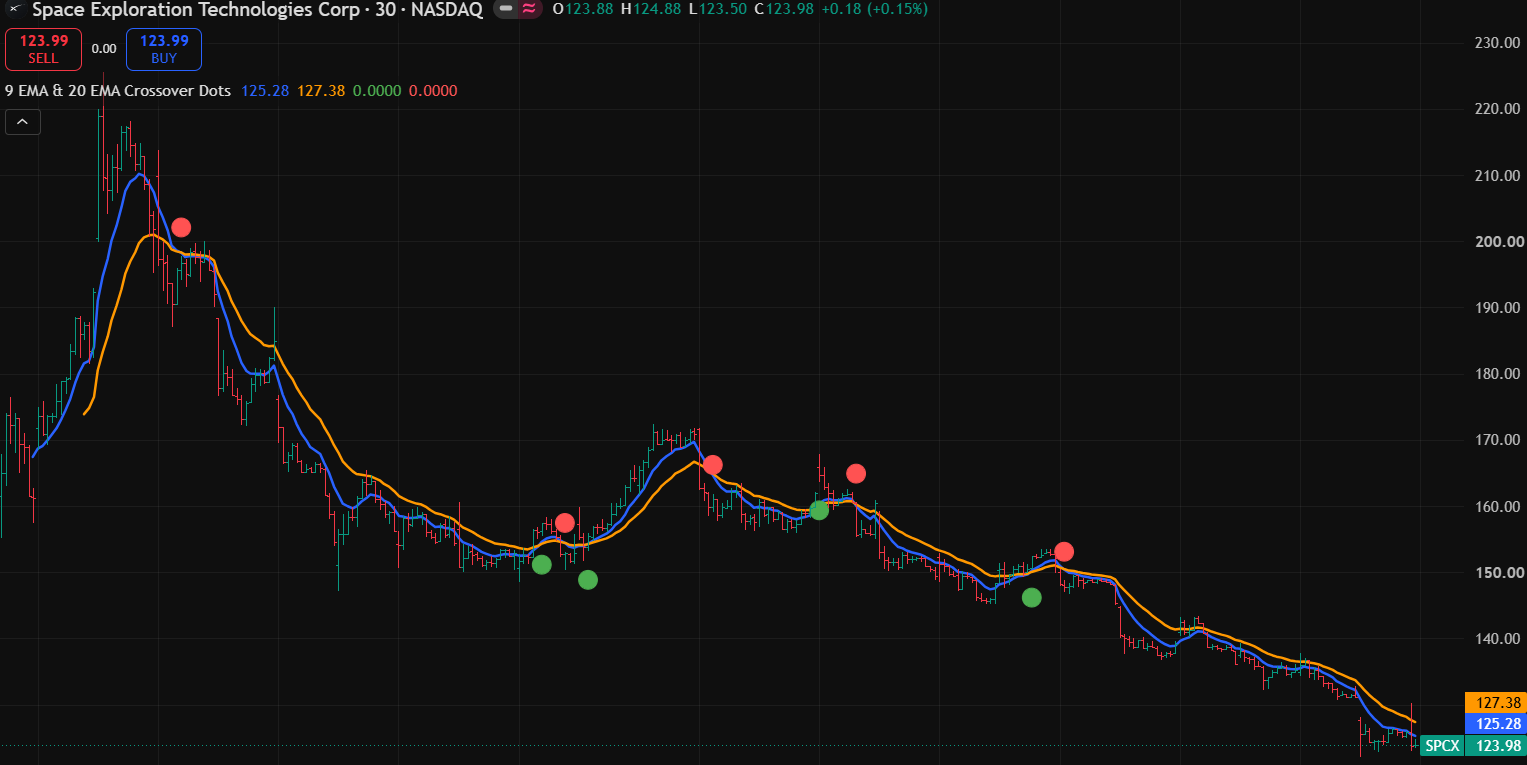
SpaceX Stock Falls Below IPO Price as Investors Reassess Valuation

Published

on

SpaceX Stock Falls Below IPO Price as Investors Reassess Valuation

SpaceX Shares Slip Below Their Initial Public Offering Price

SpaceX shares briefly traded below their initial public offering price for the first time since the company’s record-breaking stock market debut. After surging in the weeks following its IPO, the stock declined as investors reassessed the company’s valuation, growth expectations, and near-term financial outlook.

The shares fell below the $135 IPO price during trading before recovering slightly by the market’s close. Even with the recent decline, SpaceX remains one of the world’s most valuable publicly traded companies, although its market capitalization has dropped significantly from its post-IPO peak.

Why Investors Are Selling

Several factors have contributed to the sell-off. Analysts point to profit-taking after the stock’s rapid post-IPO rally, concerns about its premium valuation, and uncertainty surrounding upcoming earnings. Investors are also monitoring the expiration of lock-up restrictions, which could allow more shares to enter the market and increase selling pressure.

In addition, broader market volatility and expectations for higher interest rates have weighed on many high-growth technology companies. SpaceX has also attracted attention for its significant investments in artificial intelligence infrastructure and ambitious long-term expansion plans, prompting questions about how quickly those investments will translate into profits.

Long-Term Growth Story Remains Intact

Despite the recent weakness, many analysts continue to view SpaceX as a company with strong long-term potential. Its leadership in commercial space launches, Starlink satellite internet services, and future space exploration projects continues to support optimism about its growth prospects.

Investors are now looking ahead to the company’s first quarterly earnings report as a publicly traded company. Financial results, future guidance, and progress on Starship development could play a major role in determining the stock’s next direction.

What Investors Should Watch

The recent decline highlights how quickly market sentiment can change after a major IPO. While short-term volatility is expected, many investors believe SpaceX’s long-term value will depend on its ability to execute its ambitious business strategy and deliver consistent financial performance.

As trading continues, Wall Street will closely monitor earnings, new contracts, and upcoming milestones that could influence investor confidence and the company’s share price.

Continue Reading

Trending