Professionals on the Move is a collection of brief staffing, promotion and leadership announcements from around the profession.
Nick Florio Joins UHY to Expand Staffing Practice
UHY LLP recently announced that Nick Florio has been hired as Co-Leader of the firm’s Staffing Practice in its Northeast region. Based in UHY’s New York office, Florio advises clients on a range of public accounting issues across staffing, wealth management and M&A, among other specialties.
With over 35 years of experience providing accounting services for public and private companies, Florio has successfully guided clients through all facets of strategic planning to help them make critical decisions while ensuring transactions are tax efficient and seamless. His background also includes extensive knowledge and experience in business valuations and due diligence.
Prior to joining UHY, Florio was a senior partner at a top 25 accounting firm, where he served as part of the firm’s Executive Committee for over 25 years.
Florio is a member of the American Institute of Certified Public Accountants and the New York State Society of Certified Public Accountants and is a licensed CPA in the state of New York. He holds a BBA in accounting from Pace University.
For more information about UHY, please visit www.uhy-us.com.
Avantax Welcomes Financial Advisors Heidi and Nicholas Irwin, Longtime Fixtures of the Lockhart, Texas, Community
Avantax® Inc., a leader in tax-focused financial planning and wealth management, recently welcomed Heidi and Nicholas Irwin, married advisors who transferred to Avantax after many years of affiliation with Edward Jones, where the couple report having managed more than $250 million in total client assets, as of March 20, 2024*. The couple joins current Avantax affiliate Alliance Wealth Strategies LLC.
Heidi Irwin joined her father’s financial planning practice in 2014, decades after he started it in the Central Texas town of Lockhart, known as “The Barbecue Capital of Texas.” Nicholas joined the family business in 2020. The couple chose to transfer to Avantax because they were attracted to the flexibility of the independent financial advisor model and having access to, and the support of, experts in the Avantax Home Office, especially to provide clients with solutions for complex cases.
Having been part of a family-owned business for many years, personal relationships are key to Heidi and Nic, and they said they’ve seen that reflected in the culture of the Avantax Community.
Nic Irwin said his passion for supporting financial planning with investment research and data analytics fits well with Avantax’s emphasis on tax-intelligent planning.
Crowe welcomes and celebrates 52 new partners and principals
Crowe LLP, a public accounting, consulting and technology firm, has elected the following 52 new partners and principals to the partnership, effective today.
“On behalf of our management committee, our Board, our partners and the entire firm, I am very proud to congratulate each one of our new partners on this momentous career achievement,” said Crowe CEO Mark Baer.
Tomas Birriel Michelle Blackstock Jessica Boilard Kathryn Bostick John Chen Connor Doyle Patrick Higgins Ben Ilnicki Christa Jaganath Kevin Kerswick Justin Kuo Jenna Liao Allison Minnis Brennan Nagle Megan Rangen Kate Rudner Elizabeth Sav Chad Schenkel Jeffrey Schermerhorn Vikas Sharma Erin Twitchell
Brandon Barrientos Cary Black Matt Brown Tim Daum Andrew Eisinger Holly Hinz-Martin Helen Ho Brandon Holland Mike Keil Chris Kobylewski Bonnie Laughlin Nila Loveall Matt Marek Jennifer McMahan Leah McQueeney Elizabeth Preng Kaylee Prescott Zach Robbins
Eric Bunner Jay Fogelson Glendon Haney Tom Hoffman Maria Mora Bo Qiu Jacob Rivkin Kristen Sharpe Morgan Strobel
Lauren Beslow (Firm Risk Management) David Feinberg (Finance) Rachael Gibson (Talent Solutions) Doug Knoch (Office of Corporate Development)
KPMG U.S. Chair and CEO Paul Knopp to Helm CAQ’s Governing Board
Paul Knopp, KPMG U.S. Chair and CEO, has been elected Chair of the CAQ’s Governing Board, effective April 1, 2024.
The CAQ’s Governing Board is comprised of a variety of leaders representing the financial reporting ecosystem, including chief executive officers from some of the largest public company audit firms, the American Institute of CPAs, as well as independent board members from investor, board member and issuer communities. The Governing Board oversees the CAQ’s strategic agenda and activities.
Knopp succeeds Tim Ryan, US Senior Partner at PwC. “Tim has been instrumental in leading the CAQ to help address some of the most important issues impacting our profession, from the talent pipeline to helping the profession lead the way in emerging areas of corporate reporting like climate and cybersecurity,” said Lindsay.
Mazars in the US Hires Ryan McLaughlin as Partner
Mazars, a leading audit, tax and advisory firm in the US, recently announced that Ryan McLaughlin has joined as an Audit Partner in the Long Island Office. With over 16 years of experience working in accounting, audit and business advisory with both private and publicly held clients, Ryan will contribute to growth across multiple service lines, particularly in the Long Island market.
Throughout his career, Ryan has led audit teams serving the needs of clients across varied industries, including pharmaceutical, retail and consumer products, manufacturing and distribution, software and technology, and professional services.
Ryan joins the firm from BDO, where he began his career and was appointed to Partner in 2021. In addition to his client work, he was involved in nearly every aspect of BDO’s people development programs and seeks to continue his mentorship efforts with Mazars team members at all levels.
Ryan received a Bachelor of Business Administration (BBA) in Accounting from Siena College (NY) and is a member of the American Institute of Certified Public Accountants and the New York Society of Certified Public Accountants.
As the midyear 2026 earnings season accelerates through the week of July 20, the technology sector is displaying a notable operational split between hardware infrastructure providers and enterprise software-as-a-service (SaaS) platforms. Market indices reflect strong institutional demand for companies supplying core computing hardware, advanced power management systems, and specialized optical networking components. Conversely, software providers are facing intense margin scrutiny as Wall Street demands concrete, high-margin revenue growth to justify elevated software valuations.
The sustained outperformance of hardware equities is anchored in ongoing, multi-billion-dollar global capital investments into data center infrastructure, grid capacity expansion, and high-performance chip architecture. Semiconductor foundries and specialized component suppliers have consistently reported robust order backlogs, driven by enterprise commitments to build out secure, localized computing clusters. Investors have rewarded these companies due to their tangible, order-backed revenue visibility and strong pricing power in a constrained supply environment.
On the other hand, the software sector is navigating a transition phase. While enterprise software vendors have heavily invested in integrating automated AI capabilities across their product suites, corporate clients are scrutinizing software licencing costs and requiring clear return-on-investment metrics before expanding enterprise seat licenses. Consequently, software vendors that rely on generic feature upgrades without demonstrable productivity improvements are seeing extended sales cycles and valuation compression during quarterly earnings calls.
For equity investors, navigating the tech market for the remainder of 2026 requires rigorous fundamental analysis focused on capital efficiency and cash flow generation. Strategic focus should be directed toward hardware leaders with unassailable technological moats and enterprise software companies possessing deep workflow integration and proven monetization models. Maintaining a balanced, selective exposure ensures participation in technological growth while hedging against localized valuation corrections.
Traditionally viewed as defensive, low-growth dividend plays, utility equities are undergoing a remarkable structural re-valuation across major stock exchanges in July 2026. Driven by an unprecedented surge in industrial power requirements—stemming from high-density data centers, advanced domestic manufacturing plants, and widespread electrification initiatives—utility providers are presenting revenue growth profiles historically reserved for growth sectors. This transition has repositioned power and energy infrastructure equities into prime targets for institutional capital.
The driver of this market shift is the long-term contractual nature of commercial energy demand. Tech giants and industrial manufacturers are entering into multi-decade power purchase agreements (PPAs) with utility operators to secure guaranteed baseload power. To meet this demand, utility companies are undertaking massive capital expenditure programs to modernize electrical transmission networks, integrate next-generation nuclear and renewable power facilities, and enhance regional grid resilience. Regulated utility models allow these companies to earn predictable returns on these substantial capital investments.
Furthermore, equity analysts highlight that the sector offers an attractive blend of growth potential and downside protection in a sustained high-interest-rate environment. While elevated capital costs increase borrowing expenses for grid infrastructure upgrades, the sheer volume of new industrial power demand provides strong top-line revenue expansion that offsets debt-servicing expenses. Investors seeking reliable yield combined with structural capital appreciation are increasingly allocating capital to regulated electric utilities and independent power producers.
Moving through the second half of 2026, portfolio managers recommend evaluating utility equities based on regional regulatory environments and capital execution track records. Companies operating in regions with streamlined permitting processes, supportive state regulatory commissions, and direct proximity to expanding industrial corridors are best positioned to deliver superior long-term shareholder value.
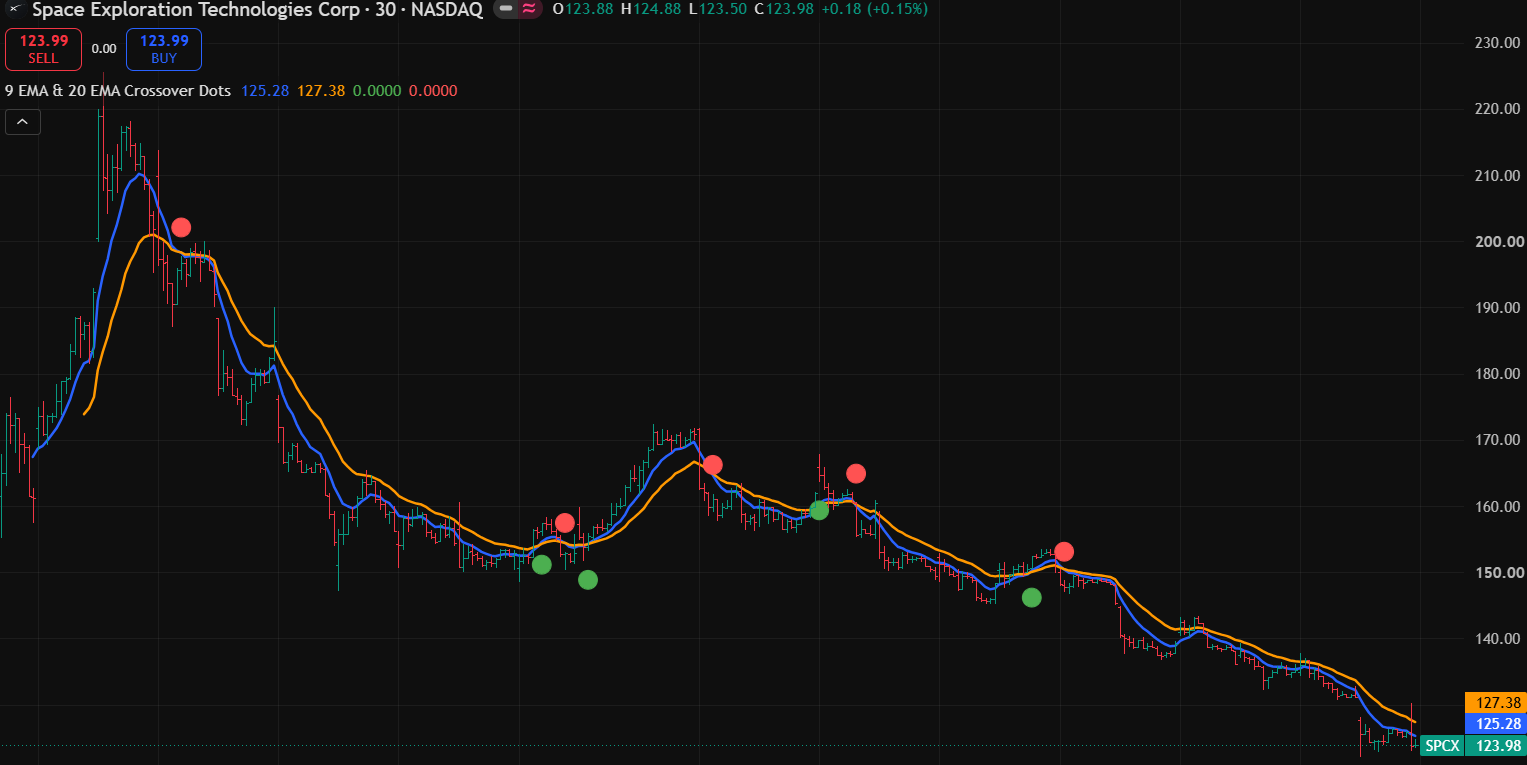
SpaceX Shares Slip Below Their Initial Public Offering Price
SpaceX shares briefly traded below their initial public offering price for the first time since the company’s record-breaking stock market debut. After surging in the weeks following its IPO, the stock declined as investors reassessed the company’s valuation, growth expectations, and near-term financial outlook.
The shares fell below the $135 IPO price during trading before recovering slightly by the market’s close. Even with the recent decline, SpaceX remains one of the world’s most valuable publicly traded companies, although its market capitalization has dropped significantly from its post-IPO peak.
Why Investors Are Selling
Several factors have contributed to the sell-off. Analysts point to profit-taking after the stock’s rapid post-IPO rally, concerns about its premium valuation, and uncertainty surrounding upcoming earnings. Investors are also monitoring the expiration of lock-up restrictions, which could allow more shares to enter the market and increase selling pressure.
In addition, broader market volatility and expectations for higher interest rates have weighed on many high-growth technology companies. SpaceX has also attracted attention for its significant investments in artificial intelligence infrastructure and ambitious long-term expansion plans, prompting questions about how quickly those investments will translate into profits.
Long-Term Growth Story Remains Intact
Despite the recent weakness, many analysts continue to view SpaceX as a company with strong long-term potential. Its leadership in commercial space launches, Starlink satellite internet services, and future space exploration projects continues to support optimism about its growth prospects.
Investors are now looking ahead to the company’s first quarterly earnings report as a publicly traded company. Financial results, future guidance, and progress on Starship development could play a major role in determining the stock’s next direction.
What Investors Should Watch
The recent decline highlights how quickly market sentiment can change after a major IPO. While short-term volatility is expected, many investors believe SpaceX’s long-term value will depend on its ability to execute its ambitious business strategy and deliver consistent financial performance.
As trading continues, Wall Street will closely monitor earnings, new contracts, and upcoming milestones that could influence investor confidence and the company’s share price.









 Stock News1 week ago
 Accounting1 week ago
 Stock News1 week ago
 Finance1 week ago

