
Personal Finance
These are the 10 most underrated places to travel, say travel agents

Klaus Vedfelt | Digitalvision | Getty Images
Looking for travel inspiration for 2025 and beyond?
Look no further: CNBC asked 10 travel agents for their recommendations of the most underhyped destinations in the world. We compiled their written answers below, including can’t-miss activities for each locale and the best times of year to visit.
You’ll also find average round-trip airfare from U.S. airports. The data, provided by travel app Hopper, is based on average fares that were available to book from Jan. 15 to Jan. 22. Prices are for May-July 2025, when most Americans plan to take their longer vacations, Hopper said.
Travelers should aim to book over the next few weeks to score the best prices, it said.
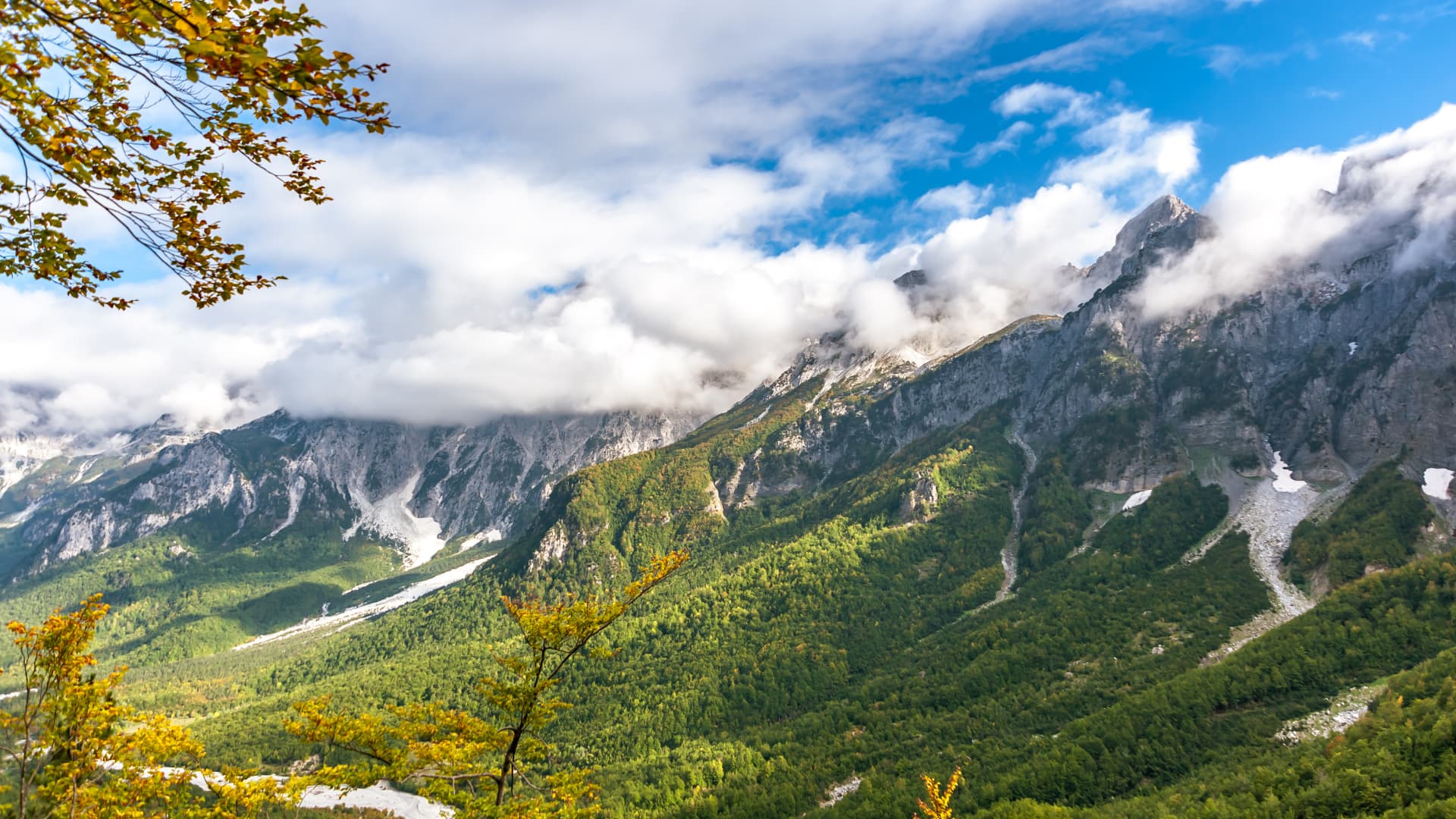
Albania
Valbona National Park, Albania.
Eduardo Fonseca Arraes | Moment | Getty Images
Recommended by: Scott Abbott, managing director of Wilderness Travel
Why to visit: “The Albanian Alps, also known as the Accursed Mountains, are a mountain range very few people know about, so are totally untouched by tourism. But have some of the most gorgeous and dramatic hikes in all of Europe. They also have guesthouses, mountain huts and hotels that feel like what the Alps were like 30-plus years ago, all owned by local families and run in a traditional way very authentic to the place and culture.”
Can’t-miss: Hiking in Valbona Valley National Park
Best time to go: June to September
Average flight price: $926 to Tirana, Albania
Ecuadorian cloud forest
Cloud forest in Ecuador.
Gerard Puigmal | Moment | Getty Images
Recommended by: Allie Almario, South America and Galapagos expert at Premier Tours
Why to visit: “Most people think of Costa Rica when they think of cloud forest, but Ecuador also has the lure of the Galapagos Islands, so it’s a terrific combination. About three hours from the capital city of Quito, Ecuador, the cloud forest feels primeval and otherworldly.
“I love the Mashpi Eco Lodge, which is on the cusp of the rain and cloud forest in a private sanctuary. You’ve got incredibly rich biodiversity in this remote area — so remote the silence is almost deafening.”

Can’t-miss: “Mashpi Lodge offers an activity called the Dragon Fly — it is up to an hour ride in an open air cable car (seating only for four guests at a time and a naturalist) where you soar over the tree canopy. You hear nothing but the wind and bird calls and the distant crash of waterfalls 500 feet below you. The butterflies are like confetti.”
Best time to go: “Temperatures are pretty consistent throughout the year, but the main difference is rainy vs. dry season. Be prepared and either way, hiking in the cloud and rain forest will always be an adventure.”
Average flight price: $588 to Quito, Ecuador
Hamburg, Germany
The canals of Hamburg, Germany
Inigo Cia | Moment | Getty Images
Recommended by: Kareem George, CEO of Culture Traveler
Why to visit: “This ultra chic city is beautiful, sophisticated and extremely fun, with a variety of attractions for diverse ages and interests. The setting of the city is quite picturesque, nestled between the Elbe River and Alster Lake with many canals in between. It is an extremely walkable city with many historic attractions in the city center — such as the Rathaus (City Hall) and St. Nikolai Church — flanked by very cool neighborhoods such as the Speicherstadt (Warehouse) District, raucous St. Pauli and the quirky Schanzenviertel.”
Can’t-miss: “Two of the many must-see attractions are the iconic Elbphilharmonie and the unique Miniatur Wunderland. Advance tickets are highly recommended for both.”
Best time to go: “Hamburg is truly a destination for all seasons, however I particularly enjoyed a recent visit in the fall. The weather was perfect and it was wonderful to stroll along the lake, canals and to explore several neighborhoods on foot.”
Average flight price: $1,090
Kyushu, Japan
A hot spring resort in Kurokawa Onsen, in Kyushu, Japan.
Bohistock | Moment | Getty Images
Recommended by: Kristin Braswell, founder of CrushGlobal Travel
Why to visit: “Brimming with natural beauty at every corner, the southern island of Japan’s Kyushu may be overlooked for its popular northern neighbors like Tokyo and Kyoto, but it’s just as thrilling. Teeming with active volcanoes, palm-forested coastlines and bubbling onsens [hot springs] to retreat in, you will be enamored at every turn by the great, wide outdoors here. I highly recommend visiting the electric metropolis, Fukuoka, and Beppu, a mountainside jewel that is home to the most spring waters in the country.”
Can’t-miss: “Visiting the famous onsens, particularly the Jigoku Circuit, which are all grouped and within walking distance. They are a sight to see.”
Best time to go: “In spring, during cherry-blossom season and when the weather is pleasantly warm, or the fall, as the foliage begins to change with the seasons.”
Average flight price: Top three airports in Kyushu, by popularity from U.S. cities based on search demand:
- Fukuoka: $1,326
- Nagasaki: $1,617
- Kumamoto: $1,594
Lençóis Maranhenses National Park, Brazil
Lençóis Maranhenses National Park, Brazil.
Ignacio Palacios | Stone | Getty Images
Recommended by: John Lansdell, planner at Trufflepig Travel
Why to visit: “Remote and staggeringly beautiful, this park of sand dunes, mangroves and freshwater lagoons is prime for both relaxing in and exploring — swimming, dune walks and quad tours, birding, etc.”
Can’t-miss: Swimming in the lagoons.
Best time to go: “When to visit is subjective, but high season is July and August: Full lagoons; warm, not too hot; rains have passed, but the gateway towns are busy. Either side of these months may be the best bet, although the park itself, a UNESCO World Heritage Site, is vast and won’t feel overly busy in high season.”
Average flight price: $1,069 to Sao Luis, Brazil
The Nordic countries (Sweden, Denmark, Finland, Norway)
Old town and town square in Stockholm, Sweden.
Leonardo Patrizi | E+ | Getty Images
Recommended by: Melissa Wu, founder of Woodlyn Travel
Why to visit: “The Nordics offer a great variety of destinations and activities, from the bustling nightlife and modern hotels of the cities, to rural pastimes like dog sledding and gazing up at the amazing northern lights. Classic Nordic activities like saunas and cold plunges share the stage with farm-to-table culinary extravaganzas. And the dollar is very strong right now, so you’ll get your money’s worth on some of the best seafood you’ll ever eat.”
More from Personal Finance:
What to expect from travel prices in 2025
Demand for international trips drives ‘travel momentum’
Here are 4 big ways to save on your next trip
Can’t-miss: “Sweden’s capital and largest city, Stockholm, is known for a great museum scene with some truly unique attractions. The ABBA museum is a must-see for music lovers, while the Viking Museum and Vasa Museum, which houses a salvaged 17th century ship, pay tribute to Sweden’s history. And no visit would be complete without a stop at the Spiritmuseum, which celebrates Sweden’s drinking culture.”
Best time to go: “The Nordics offer something unique no matter what time of year you visit. Long summer days give way to amazing fall foliage, followed by Christmas markets and ice hotels during the wintertime, and lovely island-hopping adventures in spring. Stockholm’s cherry-blossom trees bloom in mid- to late-April, with a gorgeous display that rivals more well-known (and crowded) spots like Washington, D.C. and Kyoto.”

Average flight price:
- Copenhagen: $769
- Helsinki: $890
- Oslo: $826
- Stockholm: $801
The Philippines
Boats on the serene, azure waters near Coron Palawan, Philippines.
Travelstoxphoto | Moment | Getty Images
Recommended by: Tesa Totengco, founder and CEO of Travels with Tesa
Why to visit: “Although it is very much a part of Southeast Asia, the Philippines is off to the side from the rest of its neighbors. I suggest devoting your entire trip to the country and island-hopping.
“It has some of the most beautiful white powdery sand beaches (Palawan, Boracay, Bohol). There is a thriving contemporary art scene (Art Fair in Manila, held in February), and galleries supporting local artists (Silverlens, Artinformal, Gravity Art Space, Orange Project). In the capital, you can tour Old Manila and learn of the past from the 16th century Spanish colonialization right up to the American War liberating the country from Japanese occupation. There are pop-up shops throughout the year that celebrate Filipino design, and celebrated chefs with their own restaurants celebrating Filipino cuisine. It’s a predominantly English-speaking country, so the traveler will never feel lost.”

Can’t-miss: “This country is made up of over 7,000 islands, each unique in culture, history and flavor. It’s best to make a ‘halo-halo’ (meaning ‘mixed’) experience: Not just beach, for which the country is most famous.”
Best time to go: “It’s a tropical country, so the Philippines is hot and humid year round. Avoid the rainy season from June to October and come from December to February when the country is at its coolest.”
Average flight price:
- Manila: $1,296
- Cebu City: $1,446
- Angeles City: $1,461
Tunisia
Sidi Bou Said, a town in northern Tunisia.
Max Shen | Moment | Getty Images
Recommended by: Sofia Markovich, owner of Sofia’s Travel
Why to visit: “Tunisia is home to some of the world’s most well-preserved Roman ruins, including the iconic El Jem Amphitheatre, a UNESCO World Heritage site that rivals Rome’s Colosseum in grandeur. Carthage, once a powerful city-state, showcases the remnants of an ancient civilization that shaped Mediterranean history.
“From the rolling dunes of the Sahara Desert to the pristine beaches of Hammamet, Sussa and Djerba, the country offers a variety of settings for adventure and relaxation. Matmata’s troglodyte homes, famously featured in Star Wars films, add a touch of cinematic wonder to the experience.”
“Tunisia’s cuisine is a highlight that captivates food lovers. With its bold flavors and Mediterranean influences, dishes like brik (a savory pastry), couscous and harissa-infused stews offer an authentic taste of the region. The country’s burgeoning wine industry adds to its allure.”
Amphitheatre of El Jem in Tunisia.
Westend61 | Westend61 | Getty Images
Can’t-miss: “Sidi Bou Said, with its white-washed houses and blue doors; and Carthage.”
Best time to go: “Tunisia is great to visit year-round”:
- Spring (March-May): “Warm, ideal for exploring ruins and nature.”
- Summer (June-August): “Hot, perfect for beaches but avoid inland heat.”
- Autumn (September-November): “Mild, great for both beaches and culture.”
- Winter (December-February): “Cool, best for the Sahara and fewer crowds.”
Average flight price: $1,360 to Tunis
Uzbekistan
Bibi Khanum Mosque in Samarkand, Uzbekistan.
Izzet Keribar | Stone | Getty Images
Recommended by: Jonathan Alder, CEO of Jonathan’s Travels
Why to visit: “This incredible melting pot of cultures is one of the most stunning destinations in the world, with architecture, history and nature that would surprise even the most experienced traveler.
“Its cuisine — a melting pot of Persian, Indian, Italian, and Chinese with hints of Russian — is a foodie’s dream. Once the heart of the Silk Road, the architecture doesn’t look like anything else you’ve ever seen. I love to start in the capital of Tashkent, which is a modern metropolis, then head to the ancient side of the country at the far end of the desert to step back in time. The mosque of Samarkand is one of the most incredible architectural highlights you’ll see in your life.
“Getting out of the cities, you can head into the mountains, which are essentially the back of the Himalayas, for incredible nature and green valleys outside of the stark, dramatic desert that you get for most of the rest of the country.”
The Old Town in the City of Bukhara, Uzbekistan.
Mlenny | E+ | Getty Images
Can’t-miss: “Samarkand. This was once the capital of the Silk Road, the crossing point for all trade routes between Europe and Asia. The sites here are the biggest in the country and some of the top highlights.”
When to go: “Spring and fall. The summers are quite hot and the winters get very cold. You can also make this a ski destination in the winter and combine it with the rest of the country.”
Average flight price:
- Tashkent: $1,470
- Samarkand: $2,226
Western Australia
James Price Point, Western Australia.
Luke Mackenzie | Moment | Getty Images
Recommended by: Kemi Wells-Conrad, founder and president of Wells Luxury Travel
Why to visit: “Everyone typically thinks of Sydney and the East Coast of Australia — and don’t get me wrong, it is a beautiful coastline. But I have always been a huge fan of Western Australia. It is incredibly diverse, and the landscapes are truly magnificent.
“Perth is your starting point and known as one of the most isolated cities in the world. There is world-class wine further south in Margaret River. The coast is filled with some of the most beautiful beaches in the world, such as Monkey Mia and Ningaloo Reef, which also are teeming with amazing marine life. The Kimberleys are wild, rugged and unique.”
Bungle Bungles, beehive-shaped sandstone towers in Purnululu National Park, in Eastern Kimberleys, Western Australia.
Michael Runkel | Imagebroker | Getty Images
Can’t-miss: “Ningaloo Reef. Forget the crowds of the Great Barrier Reef out of Cairns — imagine a pristine reef with no crowds. You can also swim with whale sharks here March to August. The luxury glamping experience at Sal Salis is a unique experience.”
When to go: “April to September. This is the sweet spot, their ‘winter.’ The temperatures are mild, however still much warmer than our northern hemisphere winter. And it would allow you to travel further north to the Kimberleys — outside of their wet season and before it heats up again from October on.”
Average flight price:
- Perth: $2,043
- Broome: $3,094


Personal Finance
Next-Generation Retirement Planning: Managing Longevity Risk and Variable Income Streams


U.S.- Canada Trade Talks Collapse; Carney Says Retaliatory Tariffs Begin September 8

Flock Cameras and the Future of Public Security

AI Infrastructure Boom Hits Physical Limits: Power, Financing, and Supply Chain Strain

Armanino adds Strategic Accounting Outsourced Solutions

New 2023 K-1 instructions stir the CAMT pot for partnerships and corporations

Tax Strategy: Employee Retention Credit update
-

 Stock News1 week ago
Nvidia Q2 FY2027 Earnings beats Wall Street Expectation with Record $96.2 Billion Revenue
-
 Technology5 days ago
AI Infrastructure Boom Hits Physical Limits: Power, Financing, and Supply Chain Strain
-
 Technology3 days ago
Flock Cameras and the Future of Public Security
-
 Economics3 days ago
U.S.- Canada Trade Talks Collapse; Carney Says Retaliatory Tariffs Begin September 8